
Integrating Outsourced Insurance Eligibility Verification Services with Billing & EHR Systems
Insurance eligibility information affects how appointments are prepared, services are documented, and billing activities move forward. When eligibility checks remain separate from billing and EHR systems, teams often face delays and repeated follow-ups. Integrating Outsourced Insurance Eligibility Verification Services into these systems allows coverage details to be visible where work actually happens. This blog explains how system integration supports better coordination, timely billing preparation, and consistent use of eligibility information across daily operations.

Table of Contents
Outsourced Insurance Eligibility Verification Services in Healthcare
Outsourced Insurance Eligibility Verification Services support healthcare organizations by shifting insurance checks to external teams that handle payer rules, plan types, and coverage conditions before services occur. This approach fits into front-office and back-office operations where patient access, scheduling, and billing preparation overlap. Many practices use outsourced insurance verification to reduce internal workload during peak registration hours while maintaining continuity across systems.
From an operational standpoint, verification tasks typically occur 24 to 72 hours before an appointment, allowing practices to identify inactive policies, coverage limits, or missing subscriber data early.
Use of Insurance Eligibility Data in Billing and EHR Systems
Insurance eligibility data flows into both billing and clinical systems once verification is completed. Through EHR insurance integration, eligibility details such as payer name, plan status, and benefit indicators appear inside patient records. Billing teams rely on this same data to determine claim routing and patient responsibility.
When eligibility data is aligned correctly, the healthcare eligibility workflow connects patient intake, charge capture, and claim creation without manual re-entry. This alignment supports structured data use instead of scattered payer notes or PDFs.
Importance of Integrating Eligibility Verification with Billing and EHR
Integration becomes important because eligibility information loses value if it remains isolated. Without connection to billing and EHR platforms, verification results require manual updates, increasing delays and rework.
Integrated systems support revenue cycle automation by allowing verified data to trigger downstream actions such as claim readiness checks and billing holds. Many practices report fewer claim edits when eligibility data feeds both systems consistently before submission.
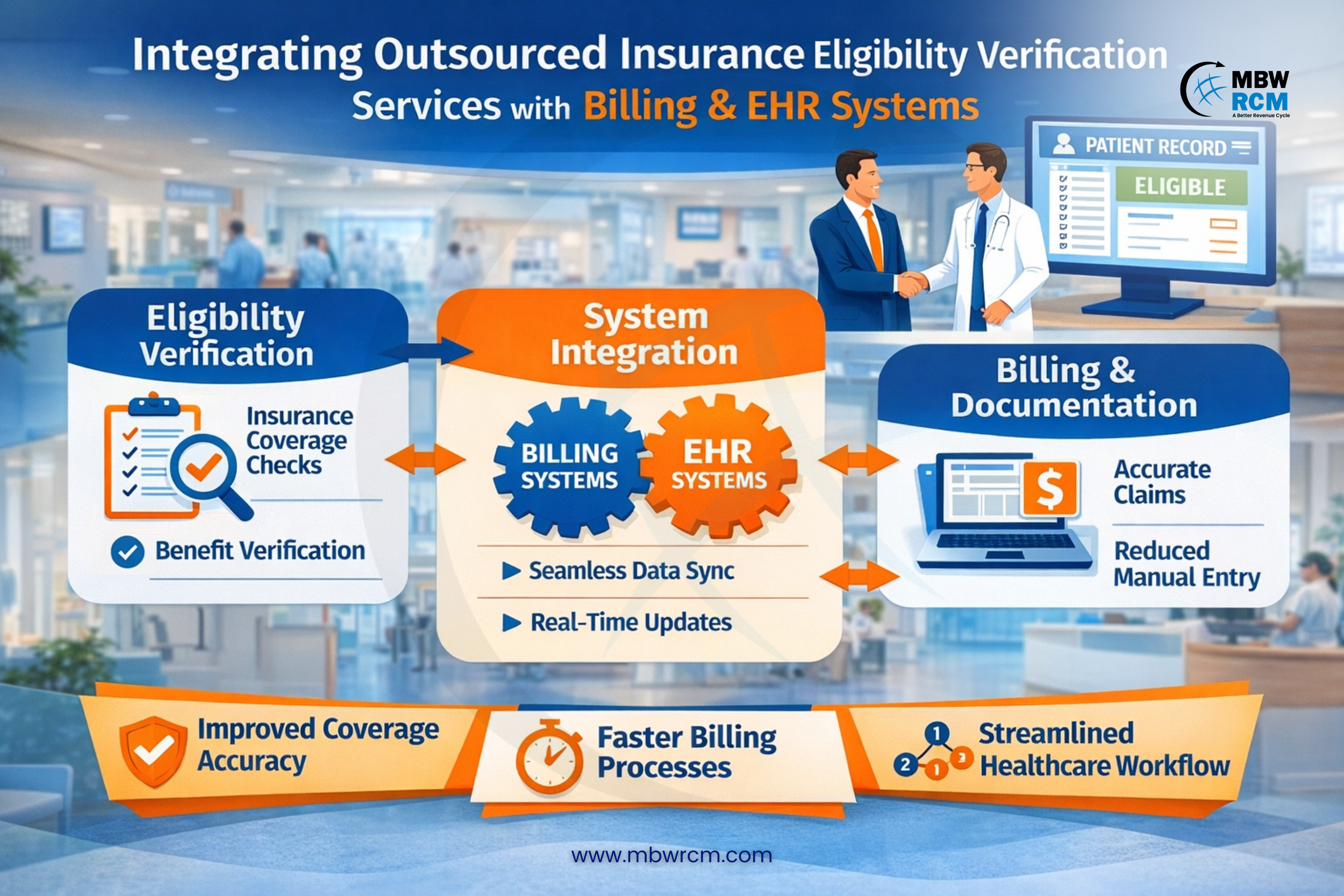
Integrating Eligibility Verification into Billing and EHR Systems
Outsourced Insurance Eligibility Verification Services integrate through APIs, clearinghouses, or flat-file exchanges depending on system capability. Modern eligibility verification software connects directly with practice management systems and EHRs to post results automatically.
During EHR and billing system integration, eligibility status flags often appear within appointment views, while billing systems receive structured payer responses. This integration supports automated workflows where verification completion updates claim status without manual confirmation.
Eligibility Verification Timing Across Systems
Transfer of Eligibility Data Between Verification, Billing and EHR
Eligibility data transfer typically follows a structured sequence within routine patient intake and Patient Insurance Eligibility Verification activities. Patient demographics move first, followed by payer inquiries, and then coverage responses. In many setups, eligibility updates sync every 15 to 30 minutes, depending on system configuration.
This exchange supports the insurance verification process by ensuring that verified information reaches billing queues before charges post. When systems remain synchronized, teams move closer to clean claims submission, reducing the need for later corrections.
Security and Compliance in Insurance Verification System Integration
Eligibility data includes protected health information and payer identifiers, making security controls essential when Outsourced Insurance Eligibility Verification Services are involved. Integrated platforms use encryption standards such as TLS 1.2 or higher during data exchange.
Compliance measures support insurance eligibility automation without exposing sensitive data. Access controls within systems ensure only authorized users can view or modify verification results. These safeguards align with broader healthcare revenue cycle management compliance requirements. For additional guidance on financial eligibility verification requirements and compliance considerations, refer this guide.
Challenges in Integrating Eligibility Verification with Billing and EHR
Integrating eligibility verification with billing and EHR systems involves more than system connectivity. Differences in data timing, payer response handling, and update schedules affect how insurance information appears within systems. Even with integration in place, these gaps can limit how eligibility results support billing and documentation. Recognizing these issues helps identify where system behavior creates delays.
Insurance Data Not Syncing Properly Between Billing and EHR
When eligibility verification is completed, insurance details may not sync fully between billing and EHR systems. Some platforms update insurance data only every 2–6 hours, while eligibility tools refresh in near real time. This timing difference causes coverage information to appear updated in one system but unchanged in the other during scheduling or billing preparation.
Eligibility Checks Running Too Early to Support Billing
Eligibility verification is often scheduled 48–72 hours before appointments, which is common in the Eligibility Verification Process in Medical Billing, but billing activities may occur closer to the visit date. If insurance details change within 24 hours of service, integrated systems may not rerun verification automatically. This results in billing teams working with outdated eligibility results despite having an active system connection.
Payer Responses Not Mapping Cleanly into System Fields
Eligibility responses from payers arrive in structured formats that billing and EHR systems interpret differently. Coverage limits, copay indicators, or plan notes may not map correctly into predefined fields. Resolving these issues requires configuration updates and testing cycles that typically take 3–5 weeks during integration.
Different Eligibility Status Display Between Systems
Billing and EHR systems often display eligibility results using different labels when Outsourced Insurance Eligibility Verification Services are involved. A coverage response may show as active in one system while displaying restrictions in another. Without aligned status rules, users must manually confirm which system reflects the payer response correctly before proceeding with charge entry or claim preparation.
Limited System Alerts for Eligibility Problems
When eligibility verification identifies mistakes, notifications may remain within verification tools instead of appearing clearly in billing or EHR screens. Without visible prompts, eligibility problems often become known only after claim responses return 7–14 days later, reducing the practical benefit of early eligibility verification.
Best Practices for Outsourced Insurance Verification Integration
Effective integration starts with defining clear data ownership and verification timing between systems. Eligibility checks should run 48–72 hours before appointments and refresh automatically when insurance or scheduling changes occur. With proper electronic health record integration, eligibility results should appear consistently in patient charts and billing dashboards.
Assign responsibility for Patient Insurance Eligibility Verification at intake
Use an Insurance Eligibility Verification Checklist to confirm payer status and benefits
Run eligibility checks 48–72 hours before appointments and refresh when details change
Show results through electronic health record integration in charts and billing views
Finish verification before billing activities begin
Best Practices and Recommended Configuration Benchmarks
Future Trends in Outsourced Insurance Eligibility Verification Integration
Future integration trends focus on automation and predictive workflows. Automating Eligibility Verification allows systems to recheck coverage automatically 48 hours before service or after policy updates.
Advanced platforms now link Patient Insurance Verification with scheduling logic, prompting staff when coverage changes. As systems mature, Benefit Verification in Medical Billing becomes more tightly connected to authorization and claim readiness, supporting Best Practices in Patient Eligibility across care settings.
Conclusion
Integrating Outsourced Insurance Eligibility Verification Services with billing and EHR systems creates a unified structure for handling payer data. When verification results move seamlessly across platforms, practices support clearer workflows, faster billing preparation, and consistent documentation. By aligning technical integration with operational standards, healthcare organizations strengthen the Eligibility Verification Process in Medical Billing while supporting long-term system efficiency.
FAQs: Insurance Eligibility Verification & EHR Integration
Request for Information
Disconnected eligibility verification, billing, and EHR systems can delay billing and increase manual follow-ups. Complete the form below to learn how integrated insurance eligibility verification services help share coverage details, reduce rework, and support smoother billing and documentation workflows.
