
Automated Insurance Eligibility Verification for Clinics Handling Same-Day Appointments
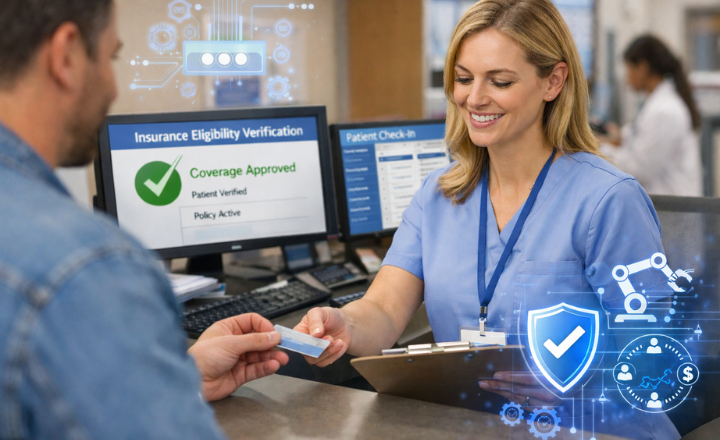
Same-day appointments create limited time for clinics to verify insurance, yet one missed detail can disrupt the entire visit. Walk-ins, last-minute referrals, and urgent visits require coverage decisions within minutes, not hours.
Automated Insurance Eligibility Verification helps clinics handle this pressure by validating insurance in real time, directly at intake.
This blog explains how automation supports same-day clinic operations, reduces verification issues, and keeps patient flow and billing on track from check-in to claim submission.
Table of Contents
Insurance Verification Challenges in Same-Day Appointment Clinics
Same-day clinics often verify coverage within 5–10 minutes before a visit, leaving little margin for error. Manual insurance coverage verification causes delays, missed payer rules, and insurance verification errors. Walk-in visits increase risk when patient insurance validation relies on phone calls. Clinics handling 40–80 same-day visits daily face frequent payer mismatches, incomplete benefits eligibility check data, and last-minute intake pressure that disrupts scheduling and billing workflows.
Why Automation Is Needed for Same-Day Insurance Checks
Automated Insurance Eligibility Verification becomes necessary when clinics must confirm coverage in under 60 seconds. Manual methods struggle to deliver real-time insurance status, especially during peak hours. Automation supports payer eligibility response access within seconds and reduces dependency on payer call centers. This shift directly supports claim denial prevention by validating coverage rules before services begin, rather than discovering issues days later during billing.
How Eligibility Automation Supports Same-Day Clinic Operations
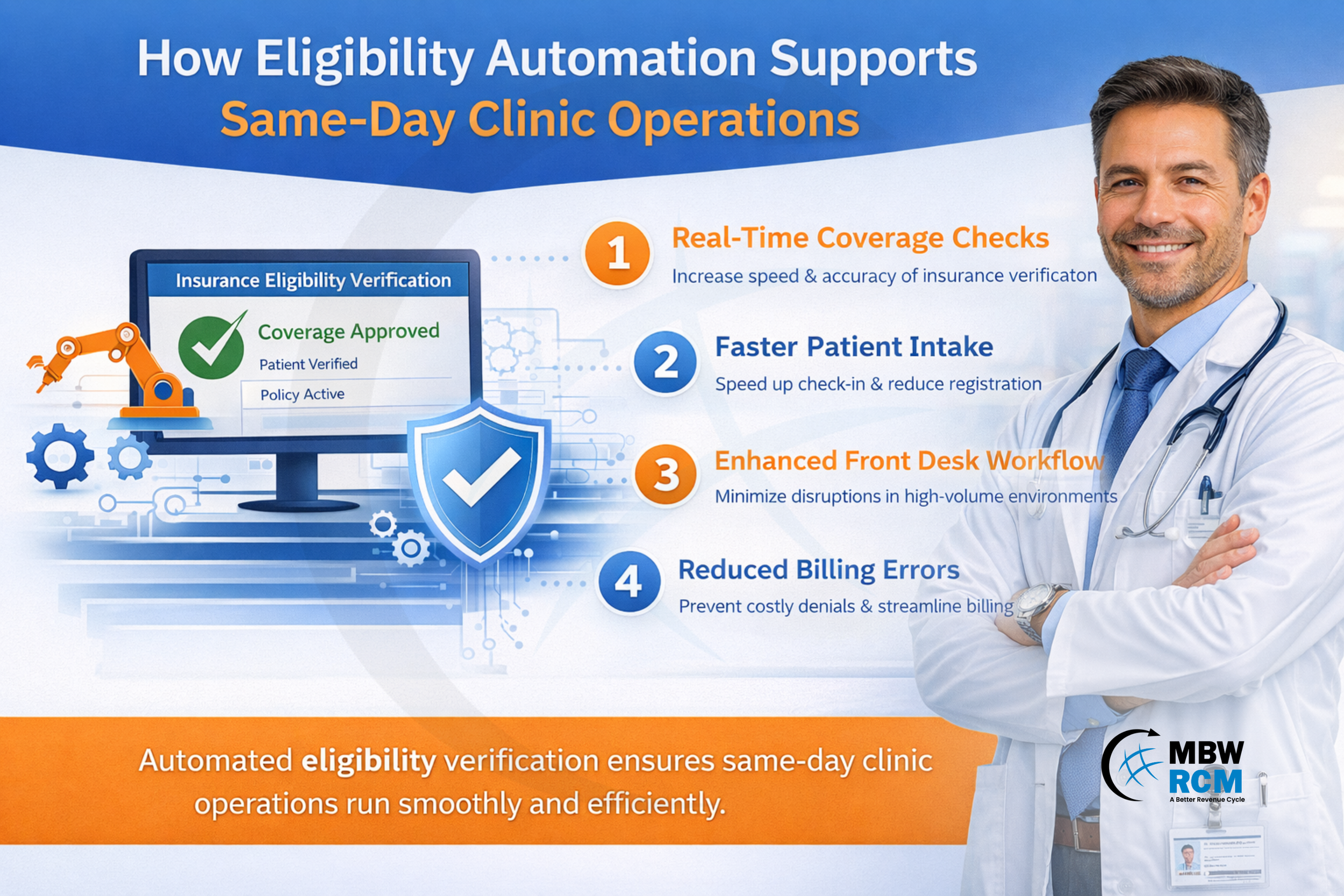
Eligibility automation supports same-day clinic operations by embedding insurance checks directly into intake workflows. Instead of delaying verification until after registration, clinics validate coverage in real time, helping staff make faster decisions and keep same-day visits moving without interruptions. The following sections show how eligibility automation supports same-day clinic operations.
Coverage Verification Embedded Directly Into Patient Registration
Automated Insurance Eligibility Verification integrates with patient intake automation tools so coverage checks occur while patients register, not after. This removes the gap between arrival and verification. In same-day clinics, where intake decisions often happen within 5 minutes, automation allows eligibility confirmation before room assignment, reducing stalled visits and last-minute coverage discoveries.
EHR-Based Synchronization That Eliminates Manual Data Handling
EHR insurance eligibility verification allows demographic data, payer IDs, and plan details to sync automatically across systems. This removes duplicate data entry and reduces mismatches between intake and billing records. Clinics managing high same-day volume benefit from fewer data corrections and a more stable intake-to-billing handoff.
Faster Patient Flow During High-Volume Same-Day Hours
Eligibility automation supports operations during peak intake windows, typically early mornings and mid-afternoons. Automated checks replace payer calls that once took up to 15 minutes per patient. This allows clinics to maintain patient flow even when walk-ins spike, without adding temporary staff or extending wait times.
Early Eligibility Confirmation That Prevents Downstream Rework
By confirming eligibility before services begin, automation prevents operational rework later in the day. Clinics avoid post-visit insurance corrections that often delay claims by several business days. This upfront verification stabilizes daily workflows and reduces interruptions for both clinical and administrative teams.
Direct Support for Revenue Cycle Coordination
Eligibility automation strengthens revenue cycle management (RCM) by validating coverage rules before care delivery. Same-day clinics can submit claims sooner, often within 24 hours, because eligibility questions are resolved at intake. This alignment reduces billing backlogs and supports predictable claim movement.
Standardized Intake Operations Across Multiple Locations
For multi-location clinics, eligibility automation applies the same verification logic at every site. This consistency supports Patient Intake Efficiency for Multi-Location Clinics by reducing staff-dependent variation. Clinics maintain uniform intake standards even when staffing levels, visit volume, or payer mix differ by location.
Staff Time Reallocated From Insurance Tasks to Patient Handling
Automation shifts staff focus away from manual verification tasks. Front desk teams spend less time on payer portals and phone queues and more time guiding patients through check-in. This operational shift improves throughput and allows clinics to handle more same-day appointments without increasing administrative burden.
Same-Day Intake Operations: Before and After Comparison
Instant Coverage Checks During Patient Check-In
Automated Insurance Eligibility Verification delivers real-time results during check-in, often in under 30 seconds. Systems validate active plans, copay and deductible verification, and plan restrictions before the visit starts. Front desk insurance verification becomes consistent across staff shifts, preventing coverage surprises. Clinics using automation report smoother intake during morning rush hours when same-day volume peaks between 8 a.m. and 11 a.m.
Manual vs Automated Insurance Verification in Same-Day Clinics
Manual verification typically requires 8–15 minutes per patient and varies by staff experience. Automated Insurance Eligibility Verification standardizes the Eligibility Verification Process, returning structured payer data instantly. Automation reduces variability across locations and shifts, supports clean claims processing, and lowers the chance of missing service-level requirements that often lead to rejected or delayed claims after same-day visits.
Manual vs Automated Insurance Verification Time Comparison
Role of Front Desk Staff in Automated Eligibility Checks
With Automated Insurance Eligibility Verification, front desk teams focus on confirmation rather than investigation. Staff review system responses, flag exceptions, and guide patients when coverage limits appear. This workflow reduces stress during peak hours and supports Patient Insurance Verification without repeated payer calls. Automation also supports Patient Intake Efficiency for Multi-Location Clinics by applying the same verification logic across all sites.
Key Benefits for Clinics Handling Same-Day Appointments
Automated Insurance Eligibility Verification improves intake speed, reduces rework, and supports predictable billing outcomes for same-day clinics. Clinics report fewer post-visit corrections, faster claim submission cycles, and reduced dependency on back-office follow-ups. The system also supports Outsourced Insurance Eligibility Verification models by standardizing data exchange, allowing external teams to work efficiently without disrupting same-day clinical operations.
Intake processing reduced by 5–10 minutes per patient
Claims submitted within 24–48 hours after visits
Eligibility-related follow-ups reduced by 30–40%
External verification teams aligned within 1 business day
Same-Day Use Cases for Automated Insurance Eligibility Verification
Same-day urgent care, imaging centers, and specialty clinics benefit most from Automating Eligibility Verification. High-volume mornings, weekend walk-ins, and short-notice referrals require instant validation. Automation supports benefits eligibility check consistency across locations and helps clinics process 20–30% more same-day visits without increasing front desk staffing levels.
Urgent care centers handling walk-ins with peak intake in under 10 minutes
Primary care clinics offering same-day sick visits scheduled within 24 hours
Specialty practices with last-minute consults requiring immediate coverage approval
Outpatient imaging and lab centers processing referrals on the same day
Telehealth providers with rapid appointment scheduling within 15–30 minutes
For more details on practical outcomes, read about the key benefits of automated insurance eligibility verification.
Common Same-Day Insurance Issues Solved Through Automation
Same-day visits often surface insurance issues after the visit, when corrections are harder to manage. Eligibility automation resolves these risks during intake by validating coverage before services begin. The following sections highlight common same-day insurance issues addressed through automation.
Mismatched Member IDs Identified Before the Visit Begins
Automated systems resolve mismatched member IDs by validating subscriber details in real time during intake. Errors that previously appeared 2–4 days after visits are flagged immediately, allowing corrections before services occur and preventing claim rejections tied to incorrect policy data.
Inactive or Terminated Plans Detected at Intake
Automation detects inactive plans during eligibility checks so clinics can address coverage gaps before treatment. This prevents visits from proceeding under invalid policies and reduces unpaid claims caused by terminated coverage discovered after billing.
Missing Referral and Authorization Rules identified Early
Automated Insurance Eligibility Verification identifies missing referral requirements and service limitations tied to payer rules. Early detection prevents denials that often delay claims by 3–7 business days when authorization issues surface after care delivery.
Coverage Exclusions Identified to Prevent Same-Day Rejections
Automation supports Insurance Verification Prevent Same-Day Claim Rejections by identifying coverage exclusions before services occur. Clinics receive clear indicators at intake, reducing denied claims and limiting follow-up work for billing teams.
Eligibility Gaps Addressed Before Claims Submission
By resolving eligibility gaps during intake, clinics avoid disputes that typically arise after claims submission. Automation ensures coverage data is complete before billing, leading to fewer corrections and more predictable reimbursement timelines.
ROI of Eligibility Automation for Same-Day Appointment Clinics
Clinics adopting Automated Insurance Eligibility Verification typically see ROI within 60–90 days. Reduced denials, faster claim turnaround, and lower staff hours drive measurable savings. Automation supports clean claims processing rates above 95% and reduces follow-up workload, allowing billing teams to focus on higher-value tasks rather than correcting preventable eligibility issues.
Choosing Eligibility Verification Software for Same-Day Clinics
Selecting the right platform depends on response speed, payer coverage, and EHR compatibility. Clinics should prioritize systems that deliver real-time insurance status, structured payer responses, and seamless integration with scheduling tools. The solution should support same-day workflows without adding steps, ensuring coverage decisions occur before the visit starts, not after billing delays.
Conclusion
Same-day care depends on timely decisions, and insurance verification directly affects how smoothly visits move from check-in to billing. Automation allows clinics to validate coverage at intake, reduce avoidable rework, and maintain consistency across locations. When eligibility is confirmed before the visit starts, operations stay predictable and disruptions are limited. If your organization is evaluating reliable eligibility verification services for same-day appointments, contact us to learn how automation can support faster intake and cleaner billing from day one.
FAQs: Same-Day Insurance Eligibility Verification for Clinics
Request for Information
Same-day appointments allow little time for manual insurance checks. Delayed or inconsistent verification can disrupt intake, slow patient flow, and lead to post-visit billing issues. Complete the form below to learn how eligibility verification services support real-time coverage checks for same-day visits and help clinics maintain efficient intake and billing workflows.
