
How Surgical Teams Handle the Eligibility Verification Process in Medical Billing
Surgical procedures depend on more than clinical readiness alone. Insurance eligibility determines whether a case proceeds as planned, receives approval, or moves smoothly through billing after surgery. From intake to claim submission, surgical teams follow a structured approach to verify coverage, confirm benefits, and address payer requirements within defined timelines.
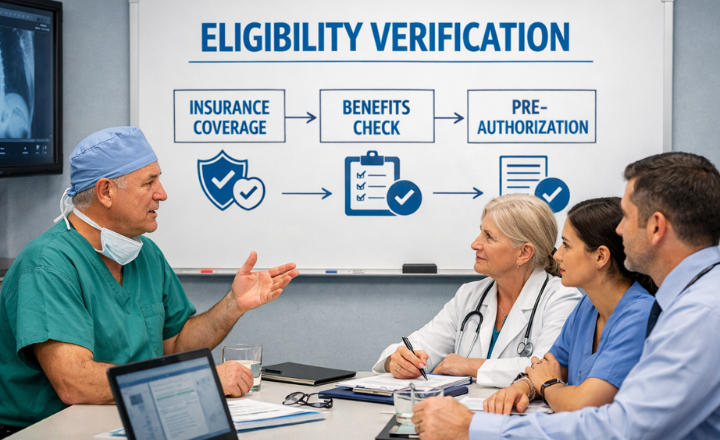
Understanding how surgical teams handle the Eligibility Verification Process in Medical Billing helps reduce last-minute cancellations, prevent billing delays, and maintain consistency across surgical scheduling, authorization, and claims workflows.
Table of Contents
Importance of eligibility verification before surgical scheduling
Early verification is completed before procedures are placed on the schedule because insurance status directly affects case approval. This step supports preoperative insurance verification by confirming active coverage, benefit limits, and authorization needs 3–5 business days before surgery. Addressing coverage restrictions in advance helps reduce day-of-surgery cancellations and supports stable operating room utilization during surgical planning.
Surgical Practices Managing the Eligibility Verification Process in Medical Billing
Surgical practices manage the Eligibility Verification Process in Medical Billing by assigning intake and billing teams defined roles. This structure supports the overall Surgical billing process by ensuring insurance data flows correctly before procedures are finalized. Most practices initiate verification within 24 hours of patient registration to avoid downstream billing disruptions.
The following steps demonstrate how surgical teams handle the Eligibility Verification Process in Medical Billing before surgery planning and claims preparation begin.
Initiating eligibility checks during surgical patient intake
Eligibility checks begin at intake using Patient insurance validation to capture payer name, subscriber ID, and policy type. This step supports Surgical patient eligibility verification and is typically completed within the first day of patient contact to prevent data gaps before scheduling moves forward.
Confirming active insurance coverage before surgical scheduling
Coverage confirmation occurs at least 72 hours before scheduling using Patient Insurance Verification through payer portals. Staff confirm effective dates and plan status to complete Patient coverage verification for surgery. Active coverage confirmation at this stage prevents wasted operating room blocks tied to invalid insurance.
Matching scheduled surgical procedures with insurance coverage
Planned procedures are reviewed against payer benefits to support Benefit Verification in Medical Billing. This review ensures scheduled CPT codes align with payer rules and supports compliant Surgical procedure billing. Procedure-to-benefit matching usually occurs 2–3 days before authorization review begins.
Reviewing deductibles and patient responsibility for surgical services
Billing teams review deductibles and co-insurance balances updated within the last 24 hours as part of Patient Insurance Eligibility Verification. This step helps physicians understand patient responsibility before surgery and avoids disputes that delay billing resolution after the procedure.
Performing manual eligibility verification for complex surgical cases
Manual verification is used when payer systems provide limited data or when multiple policies exist. Staff contact payers directly and document call references, often to support Pre-authorization for surgery when payer rules depend on diagnosis, facility type, or surgical setting.
Running automated eligibility verification for surgical billing
Practices use batch tools for Automating Eligibility Verification, running checks 7 days before surgery and again 1 day prior. Automation supports Preventing claim denials by identifying eligibility changes that occur between scheduling and the procedure date.
Documenting insurance verification details for surgical claims processing
Verification findings are logged in billing systems within 24 hours to support clean Surgical claims submission. Proper documentation ensures eligibility details remain available during payer audits, follow-ups, or claim reviews occurring 30–90 days after submission. To better understand how insurance verification works in medical billing, read this detailed guide here.
Resolving insurance discrepancies before surgical procedures
Surgical billing teams identify subscriber mismatches, incorrect group numbers, and secondary coverage conflicts during eligibility review and correct them within 24–48 hours. Teams validate updated insurance details through payer portals and clearinghouses before surgery. Resolving these gaps supports Revenue cycle optimization by reducing unpaid claims, limiting post-operative rework, and lowering denial rates linked to eligibility errors identified after surgical services are rendered.
Rechecking eligibility status on the day of surgery
Same-day verification captures overnight policy changes that automated tools may miss. This final step reinforces Best Practices in Patient Eligibility and protects providers from performing services under coverage that terminated within the last 24 hours.
Preparing surgical claims using verified eligibility information
Verified insurance data feeds directly into claim generation workflows, ensuring payer details remain consistent from intake to submission. This continuity supports accurate billing timelines and reduces payer rejections during initial adjudication.
What surgeons should know about eligibility verification in surgical billing
Surgeons benefit from understanding how eligibility affects authorization, scheduling, and billing outcomes across the surgical care cycle. Awareness of verification timelines helps align clinical decisions with payer requirements and supports coordination across surgical and billing teams, particularly when procedures involve high-cost implants or facility-based services.
Eligibility verification is typically completed 3–5 days before surgery to confirm coverage and benefit limits
Authorization requirements are often identified 48–72 hours prior to scheduled procedures
Coverage changes identified within 24 hours of surgery may delay or reschedule non-urgent cases
Verified eligibility data directly impacts post-operative billing and claim acceptance rates
Surgical Eligibility Verification Timeline in Medical Billing:
Eligibility Verification Checklist for Surgical Billing
An Insurance Eligibility Verification Checklist includes policy status, benefit limits, authorization needs, deductible balances, and payer references. Standardized checklists improve consistency across cases and reduce missed steps during high-volume surgical scheduling periods by supporting Surgical Eligibility Verification within the Eligibility Verification Process in Medical Billing.
Surgical Eligibility Verification Checklist Used by Surgical Teams
☐ Confirm active insurance policy specific to surgical services 3–5 business days before surgery
☐ Validate subscriber details and plan type during surgical patient intake within 24 hours
☐ Verify surgical benefit coverage for the scheduled procedure 72 hours before scheduling
☐ Identify surgical procedures requiring authorization 48–72 hours prior to the surgery date
☐ Review deductible, co-insurance, and co-payment amounts tied to surgical claims within 24 hours
☐ Document payer verification responses, surgical coverage notes, and reference numbers in billing systems
☐ Recheck insurance eligibility on the day of surgery to confirm coverage remains active
Conclusion
Effective eligibility verification supports smoother surgical scheduling, timely authorizations, and cleaner claim submission. When surgical teams follow structured verification steps, coverage gaps and billing delays become easier to control across the surgical care cycle. Practices that rely on dedicated Eligibility Verification Services gain better visibility into payer requirements and verification timelines. If your surgical practice needs support managing eligibility verification at scale, Contact us to learn how specialized verification workflows can support consistent billing outcomes and reduce avoidable disruptions.
FAQs: Surgical Eligibility Verification & Billing
Request for Information
Eligibility verification gaps can slow surgical billing and increase follow-ups. Complete the form below to learn how eligibility verification services help surgical teams share coverage details, reduce rework, and support smoother billing workflows from intake through claims.
