Why Practices Outsource Radiation Oncology Billing

Every radiation oncology practice wants the same outcome—deliver exceptional patient care and get paid accurately for the services provided.
Unfortunately, that's becoming harder to achieve.
Reimbursement rules continue to change, prior authorizations require more attention, and payers are asking for greater documentation than they did just a few years ago. At the same time, practices are expected to do more with smaller administrative teams while keeping denials low and cash flow healthy.
It's no surprise that more practices are outsourcing their Radiation Oncology Billing Services.
Not because they can't submit claims.
Because they're finding it harder to maintain an efficient revenue cycle as billing becomes more specialized.
If you're considering outsourcing, understanding why other practices have already made that decision can help you determine whether it's the right step for your organization.
Table of Contents
Radiation Oncology Billing Isn't Just About Submitting Claims
Many specialties generate a claim after a patient visit or procedure.
Radiation oncology works differently.
A single treatment course may involve consultation, simulation, treatment planning, dosimetry, image guidance, treatment delivery, weekly management, and follow-up care. Each stage generates billable services, and every stage depends on accurate documentation from the one before it.
That means billing errors don't always happen when a claim is submitted. They often begin much earlier.
A Small Documentation Gap Can Become a Big Reimbursement Problem
Imagine a patient's treatment plan changes after simulation.
The clinical team updates the plan, but the supporting documentation isn't completed until later. By the time the claim reaches the payer, the treatment delivered and the documentation no longer align perfectly.
The payer requests additional records.
Payment is delayed.
The billing team spends valuable time correcting something that could have been prevented.
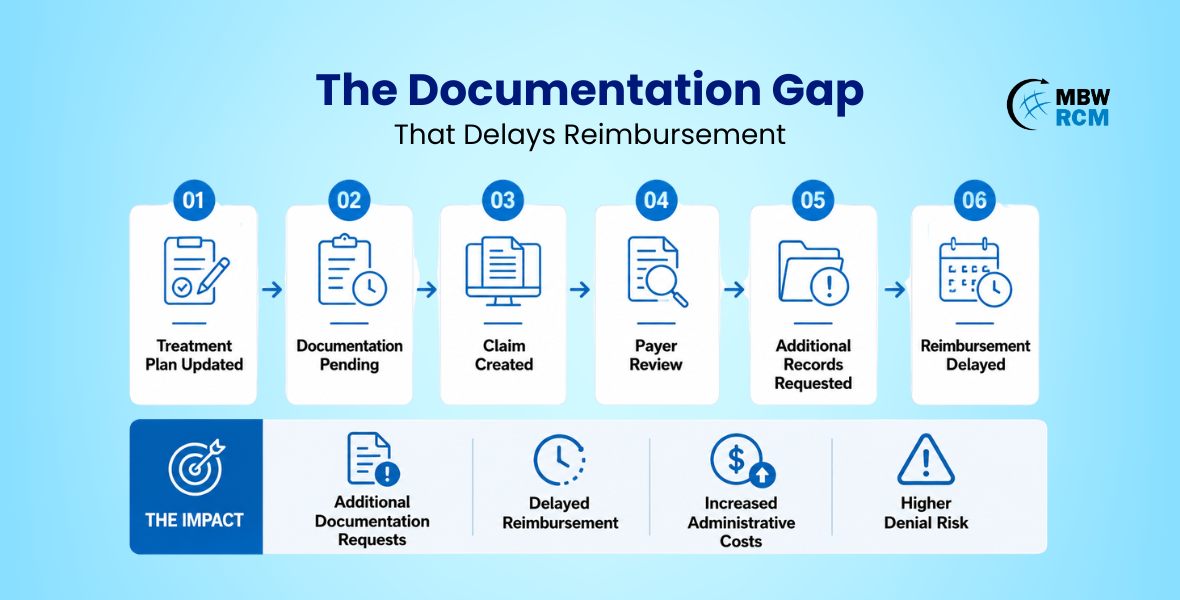
These situations happen more often than many practices realize, especially when clinical and billing teams are working under heavy workloads. Documentation isn't the only cause of delayed reimbursement. Explore this blog on missing charges in radiation oncology treatment billing.
That's Why Specialty Experience Matters
General medical billing experience is valuable, but radiation oncology comes with its own coding rules, payer policies, and documentation expectations.
Experienced Radiation Oncology Billing Companies understand those workflows because they manage them every day. Instead of reacting to problems after claims are denied, they build processes that help prevent those problems from occurring in the first place.
Why More Practices Are Outsourcing Radiation Oncology Medical Billing
Most practices don't wake up one morning and decide to outsource.
It's usually a gradual decision.
The billing team starts spending more time following up on unpaid claims. Prior authorizations become more demanding. Staff members are pulled into payer calls instead of process improvement. Revenue continues coming in—but not as consistently as it once did.
Individually, these issues don't seem alarming.
Together, they begin affecting the financial health of the practice.
The Workload Keeps Growing
Medical billing has expanded far beyond claim submission.
Today's teams handle eligibility verification, coding, prior authorization, payment posting, denial appeals, Accounts Receivable Follow-Up, compliance checks, and reporting. Every additional responsibility increases the amount of time needed to keep the revenue cycle moving efficiently.
The challenge isn't that internal teams lack capability.
The challenge is that they're expected to manage more work with the same number of people.
Outsourcing Adds Expertise Without Adding Headcount
Hiring more employees isn't always practical.
Experienced oncology billers are difficult to recruit, onboarding takes time, and continuous training is necessary to keep pace with changing payer requirements.
Outsourcing Radiation Oncology Medical Billing gives practices immediate access to specialists who already understand radiation oncology workflows. Instead of expanding payroll, practices expand expertise.
Claim Denials Usually Start Long Before the Claim Is Submitted
One of the biggest misconceptions in healthcare billing is that denial management begins after a claim is rejected.
In reality, the process starts much earlier.
Many denials originate from incomplete documentation, missing authorizations, coding inconsistencies, or payer-specific requirements that weren't identified before submission.
By the time the denial arrives, the real problem has already happened.
Prevention Is More Valuable Than Correction
Appealing a denied claim is important.
Preventing the denial is even better.
That's why experienced Oncology Revenue Cycle Management teams focus heavily on front-end processes. Documentation reviews, coding validation, payer-specific edits, and pre-bill quality checks all help reduce avoidable denials before claims leave the practice.
The result isn't just fewer denials.
It means less rework for staff, faster reimbursement, and a revenue cycle that's easier to manage.
Staffing Challenges Are Pushing Practices Toward Specialized Billing Partners
Finding experienced healthcare billing professionals has become increasingly difficult, especially in specialized fields like radiation oncology.
Many practices rely on one or two senior employees who understand payer requirements, specialty coding, and internal workflows. When those employees leave, the disruption is often immediate.
Replacing Experience Takes Time
New hires don't become radiation oncology experts overnight.
Learning payer policies, specialty coding, and practice-specific workflows takes months. During that transition, claim turnaround often slows, coding questions increase, and billing managers spend more time training than improving operations.
For a busy practice, that lost productivity can be just as costly as an increase in claim denials.
Stability Is One of the Biggest Advantages of Outsourcing
Working with a specialized Radiation Oncology Billing Company gives practices access to an established team instead of depending on individual employees.
Knowledge is shared across multiple specialists, workflows remain consistent, and billing operations continue even when staffing changes occur.
For many practices, that stability becomes one of the biggest reasons they continue outsourcing year after year.
Why Prior Authorization Has Become a Revenue Cycle Challenge
Prior authorization has always been part of radiation oncology, but it's no longer a simple administrative task. As payer requirements become more detailed, keeping approvals aligned with treatment plans has become a significant responsibility for both clinical and billing teams.
The challenge isn't obtaining an authorization—it's making sure every approved service matches what is ultimately billed. Treatment plans evolve, additional fractions may be required, or documentation may need updates during the patient's course of care. If those changes aren't reflected throughout the revenue cycle, reimbursement delays become much more likely.
Practices that outsource Radiation Therapy Billing often benefit from standardized authorization workflows where scheduling, documentation, coding, and billing teams work together. That coordination reduces preventable denials and allows treatment to continue with fewer reimbursement interruptions. See how stronger prior authorization workflows protect revenue in this case study on reducing prior authorization-related revenue risk.
Strong Accounts Receivable Follow-Up Keeps Revenue Moving
Submitting a clean claim doesn't guarantee timely payment. Once a claim reaches the payer, it still requires monitoring until reimbursement is received.
Many practices discover that thousands of dollars remain tied up in aging Accounts Receivable, not because claims were denied, but because they were never followed up consistently. Commercial payers, Medicare, and managed care plans all have different payment timelines, making organized follow-up essential.
A dedicated Accounts Receivable Follow-Up team actively reviews unpaid claims, investigates underpayments, resolves payer issues, and escalates appeals when necessary. Instead of waiting for claims to age beyond 90 or 120 days, they work proactively to recover outstanding revenue.
Over time, consistent follow-up not only improves collections but also shortens reimbursement cycles and strengthens overall cash flow. To learn more about radiation oncology, read this blog on 2026 Radiation Oncology Coding & Reimbursement.
Technology Supports the Revenue Cycle, But Expertise Drives Results
Technology has improved healthcare billing, but software alone doesn't improve reimbursement.
Claim scrubbing tools, eligibility verification systems, and reporting dashboards are valuable, yet they still depend on accurate documentation and informed decision-making. A billing platform may flag a missing modifier, but it won't recognize when a physician's documentation doesn't fully support medical necessity or when a payer has introduced a new billing requirement.
This is where experienced Medical Billing Services create value. Technology handles repetitive tasks, while billing specialists apply the clinical and payer knowledge needed to submit accurate claims and resolve complex reimbursement issues.
The most successful revenue cycle operations combine skilled professionals with the right technology—not one without the other. If you're interested in learning more about radiation oncology, read this blog on Professional vs. Technical Component Billing in Radiation Oncology.
Signs Your Practice May Benefit from Outsourcing Radiation Oncology Billing
Not every practice needs to outsource immediately. However, there are common warning signs that suggest your current billing process may no longer be keeping pace with the demands of radiation oncology.
If your practice is experiencing several of the following challenges, it may be time to evaluate your revenue cycle strategy:
Claim denials continue to increase despite timely claim submission.
Accounts Receivable over 90 days keeps growing, affecting monthly cash flow.
Prior authorizations delay treatment or reimbursement more frequently than before.
Recruiting and retaining experienced oncology billers has become difficult.
Practice growth is placing additional pressure on your existing billing team.
One or two of these issues may be manageable. When several occur together, they often indicate underlying workflow gaps that can affect reimbursement performance over time.
Choosing the Right Radiation Oncology Billing Company
Outsourcing only delivers results when the billing partner understands the specialty.
Radiation oncology involves unique coding requirements, treatment workflows, and payer expectations that general billing companies may not encounter every day. Choosing a partner with proven experience can make a measurable difference in claim accuracy and reimbursement performance.
When evaluating a Radiation Oncology Billing Company, look beyond pricing. Ask how they manage denial trends, measure billing performance, support prior authorization, and handle Accounts Receivable Follow-Up. The answers will tell you far more about their capabilities than a pricing proposal alone.
A strong billing partner should feel like an extension of your practice—one that continuously identifies opportunities to improve reimbursement rather than simply processing claims.
Why More Practices Are Making the Switch
Radiation oncology billing isn't becoming simpler. Administrative requirements continue to grow, payer expectations continue to evolve, and staffing challenges remain a reality across the healthcare industry.
Practices that outsource aren't giving up control of their revenue cycle. They're gaining access to dedicated specialists, proven workflows, and scalable resources that help them navigate an increasingly complex reimbursement environment.
For many organizations, outsourcing creates more than operational efficiency. It provides greater financial stability, stronger reporting, improved collections, and the confidence that their billing processes can support future growth.
Ready to Improve Your Radiation Oncology Revenue Cycle?
Your practice works hard to deliver exceptional cancer care. Your billing process should work just as hard to ensure every service is reimbursed accurately and on time.
If you're dealing with increasing denials, slow reimbursements, staffing challenges, or aging Accounts Receivable, it may be time to evaluate whether your current billing strategy is supporting your long-term goals.
At MBW RCM, we specialize in Radiation Oncology Billing Services designed specifically for physician groups, cancer centers, and hospital-based practices. Our experienced billing and coding professionals help improve claim accuracy, reduce denials, strengthen Accounts Receivable Follow-Up, and optimize every stage of your Oncology Revenue Cycle Management process.
Request a free consultation with MBW RCM today. We'll review your current billing workflow, identify opportunities to improve collections, and show you how a specialty-focused revenue cycle strategy can help your practice maximize reimbursement while reducing administrative burden.
FAQs: Why Practices Outsource Radiation Oncology Billing
Is Your Radiation Oncology Billing Performing at Its Best?
If reimbursements aren't keeping pace with your patient volume, it may be time to take a closer look at your billing process. Our radiation oncology billing specialists help practices improve coding accuracy, reduce claim denials, and recover revenue that might otherwise be left behind.
Schedule a free consultation with MBW RCM to learn how we can help strengthen your revenue cycle and improve long-term financial outcomes.