Radiation Oncology Course-of-Treatment Billing: Where Duplicate and Missing Charges Occur

Radiation oncology billing isn't just about submitting one clean claim after treatment ends. It's about capturing every billable service performed throughout an entire course of care.
From the first treatment planning session to the last radiation delivery, dozens of individual services occur. Each one has documentation requirements, coding considerations, physician involvement, and timing rules. Miss just one charge—or accidentally bill one twice—and reimbursement can quickly be affected.
That's why course-of-treatment billing has become one of the biggest revenue challenges for radiation oncology practices.
Table of Contents
In this guide, we'll explore the most common areas where revenue is lost during a radiation oncology course of treatment and share practical ways to improve charge capture while protecting reimbursement.
Why Course-of-Treatment Billing Is Different
Radiation oncology follows a structured treatment pathway rather than a one-time visit. A patient may receive care over several weeks, with each phase generating separate billable services.
A typical course of treatment includes:
Treatment planning
CT simulation
Medical dosimetry
Medical physics support
Treatment devices
Daily radiation delivery
Weekly physician management
Each service has unique documentation requirements, coding considerations, and payer guidelines. Because these services occur on different dates and often involve different team members, maintaining accurate billing throughout the course of treatment requires close coordination.
Without a structured charge capture process, practices risk missing legitimate revenue or creating duplicate charges that may lead to denials or compliance concerns.
Where Radiation Oncology Charges Commonly Go Missing
Treatment Planning
Every successful course of radiation therapy begins with treatment planning. Physicians review diagnostic imaging, define target volumes, determine treatment intent, and develop a customized treatment plan based on the patient's diagnosis.
Billing issues often begin here—not because planning wasn't performed, but because documentation wasn't completed or released for billing.
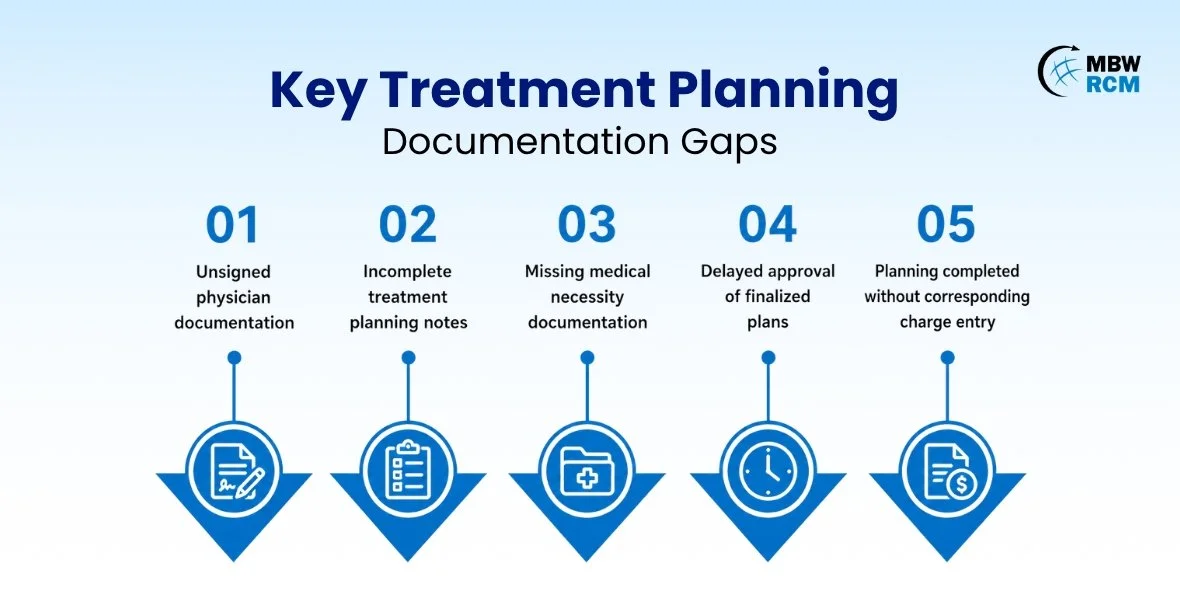
Common gaps include:
Unsigned physician documentation
Incomplete treatment planning notes
Missing medical necessity documentation
Delayed approval of finalized plans
Planning completed without corresponding charge entry
When planning documentation isn't finalized promptly, the rest of the billing workflow can also be delayed.
CT Simulation
CT simulation establishes the patient's treatment position and provides the imaging required to develop an accurate radiation therapy plan.
Since simulation frequently occurs on a separate day from planning, it's also one of the most common areas where billing discrepancies appear.
Practices often encounter:
Missing simulation charges
Duplicate charge entry
Incorrect dates of service
Documentation that doesn't support billing
Scheduling records that don't reconcile with completed procedures
Regular reconciliation between clinical scheduling and billing helps prevent these issues before claims are submitted.
Medical Dosimetry
Medical dosimetrists play a critical role in designing radiation treatment plans that maximize tumor coverage while protecting surrounding healthy tissue.
Because treatment plans may undergo multiple revisions before approval, dosimetry billing requires careful documentation and version control.
Revenue may be affected when:
Draft plans are billed instead of final approved plans
Multiple plan revisions create duplicate charges
Documentation doesn't support the billed service
Approved plans aren't linked to charge capture
Maintaining a clear workflow from plan creation through physician approval helps reduce billing errors.
Medical Physics Services
Medical physicists perform essential quality assurance activities throughout a patient's course of treatment.
These responsibilities may include equipment calibration, treatment plan verification, machine quality assurance, and ongoing technical support to ensure accurate treatment delivery.
Since much of this work occurs behind the scenes, physics-related charges are particularly vulnerable to being overlooked.
Common issues include:
Quality assurance activities not captured for billing
Missing supporting documentation
Poor communication between clinical and billing teams
Inconsistent charge entry processes
Ensuring completed physics services are routinely reviewed before billing helps improve reimbursement accuracy.
Treatment Devices
Many radiation therapy patients require customized treatment devices to ensure consistent positioning and precise treatment delivery.
Examples include:
Immobilization devices
Custom blocks
Bolus materials
Patient-specific positioning accessories
These services may be missed when:
Device fabrication isn't documented completely
Replacement devices aren't tracked
Charges are entered more than once
Clinical documentation doesn't support billing
A standardized documentation workflow helps ensure every eligible device-related service is captured appropriately.
Radiation Treatment Delivery
Daily treatment delivery represents the largest portion of billable services during the entire treatment course.
Because patients may receive treatments over several weeks, even small documentation or workflow issues can create significant revenue leakage.
Common billing problems include:
Missed treatment dates
Duplicate treatment charges
Incorrect treatment counts
Documentation mismatches
Services billed after treatment interruptions
Missed cancellations remaining on billing reports
Routine reconciliation between treatment records and charge reports helps ensure every completed treatment is billed accurately.
Weekly Treatment Management
Weekly physician management visits allow radiation oncologists to evaluate treatment progress, monitor side effects, adjust care plans, and document the patient's response to therapy.
Since these evaluations occur alongside ongoing treatment rather than as separate office visits, they are frequently overlooked during billing.
Common challenges include:
Missed weekly management documentation
Incorrect billing intervals
Missing physician signatures
Charges submitted before documentation is complete
Duplicate weekly management entries
Consistent review of physician documentation before claim submission helps reduce avoidable reimbursement delays.
Why Duplicate Charges Are Just as Costly
Many practices focus heavily on preventing missed charges, but duplicate billing can create equally significant problems.
Duplicate charges may result in:
Claim denials
Payer requests for additional documentation
Payment delays
Refund requests
Increased audit risk
Additional administrative work
Accurate billing isn't about generating more claims—it's about ensuring every eligible service is billed once, with complete supporting documentation. Want to understand the fundamentals of radiation oncology coding? Read Basics of RO Coding.
A Simple Charge Capture Workflow That Reduces Errors
Successful radiation oncology practices don't wait until the end of treatment to review billing. Instead, they verify charge capture throughout the patient's course of care.
Hello, World!
This proactive approach helps identify missing or duplicate charges early, reducing delays and improving claim accuracy.
Best Practices to Prevent Missing Radiation Oncology Charges
Improving charge capture doesn't always require new technology. In many cases, stronger processes make the biggest difference.
Consider these best practices:
Reconcile treatment records with billing reports regularly.
Standardize documentation requirements across departments.
Review scheduling records against completed clinical services.
Track each stage of the patient's treatment course.
Perform routine audits of high-value services.
Educate billing staff on radiation oncology-specific coding requirements.
Monitor denial trends to identify recurring documentation issues.
Strengthen communication between physicians, physicists, dosimetrists, therapists, and billing teams.
Small workflow improvements often lead to meaningful gains in reimbursement performance.
How Specialty-Focused Radiation Oncology Billing Makes a Difference
Radiation oncology is one of the most specialized areas of medical billing. Every stage of treatment has unique coding requirements, documentation expectations, and payer-specific billing rules.
Working with a team that understands the full course of treatment helps practices improve billing accuracy from the very beginning. Rather than focusing only on claim submission, specialty-focused billing teams verify documentation, reconcile completed services, identify missing charges, reduce duplicate billing, and address payer edits before they affect reimbursement.
This proactive approach not only protects revenue but also reduces administrative burden for physicians and staff, allowing the practice to focus more on patient care.
Protect Every Billable Service Throughout the Course of Treatment
Every planning session, simulation, dosimetry calculation, physics review, treatment device, radiation delivery, and weekly management visit represents valuable work your team has already performed. Missing even one eligible charge can impact reimbursement, while duplicate billing may create unnecessary denials and compliance concerns.
A well-managed radiation oncology billing process ensures every completed service is documented, coded, and billed accurately throughout the patient's entire treatment journey.
FAQs: Radiation Oncology Course-of-Treatment Billing
Get Your Radiation Oncology Billing Assessment today
If your practice is experiencing missed charges, delayed reimbursement, or recurring billing inconsistencies, MBW RCM's Radiation Oncology Billing Services can help. Our specialty-focused team understands the complexities of radiation oncology revenue cycle management and works to improve charge capture, reduce denials, and strengthen financial performance from planning through the final treatment session.
Request a personalized Radiation Oncology Billing Assessment today and discover where your course-of-treatment billing may be leaving revenue behind.