Professional versus Technical Component Billing in Radiation Oncology
Radiation oncology billing isn't just about choosing the correct CPT code. One of the biggest challenges practices face is determining who should bill the service and which component of the service is actually billable.
Should the physician bill the professional component?
Should the facility bill the technical component?
Can the entire service be billed globally?
The answer depends on where the service was performed, who owns the equipment, who incurred the expenses, and the patient's place of service. Getting any of these details wrong can lead to denied claims, duplicate billing, reimbursement delays, or compliance concerns.
Table of Contents
In this guide, we'll break down the differences between professional and technical component billing in radiation oncology, explain when modifiers such as Modifier 26 and TC are appropriate, and highlight common billing mistakes practices should avoid.
Why Component Billing Matters in Radiation Oncology
Radiation oncology involves both physician expertise and highly specialized equipment.
For many services, reimbursement is divided into two separate parts:
The professional component, which covers the physician's interpretation, supervision, treatment planning, and medical decision-making.
The technical component, which covers the equipment, supplies, staff, and facility resources required to perform the service.
Sometimes these components are billed together as a global service. Other times, they must be billed separately.
Understanding the difference is essential for accurate reimbursement.
Understanding the Professional Component (Modifier 26)
The professional component represents the physician's work.
It includes activities such as:
Reviewing diagnostic studies
Developing treatment plans
Supervising radiation therapy
Interpreting imaging
Medical decision-making
Clinical documentation
When only the physician's professional services are being billed, Modifier 26 is typically appended to the applicable CPT code.
Modifier 26 tells the payer that reimbursement is being requested only for the physician's professional work—not the equipment or facility costs.
Incorrect use of Modifier 26 can result in claim denials or duplicate billing when another provider has already billed the technical portion.
Understanding the Technical Component (TC)
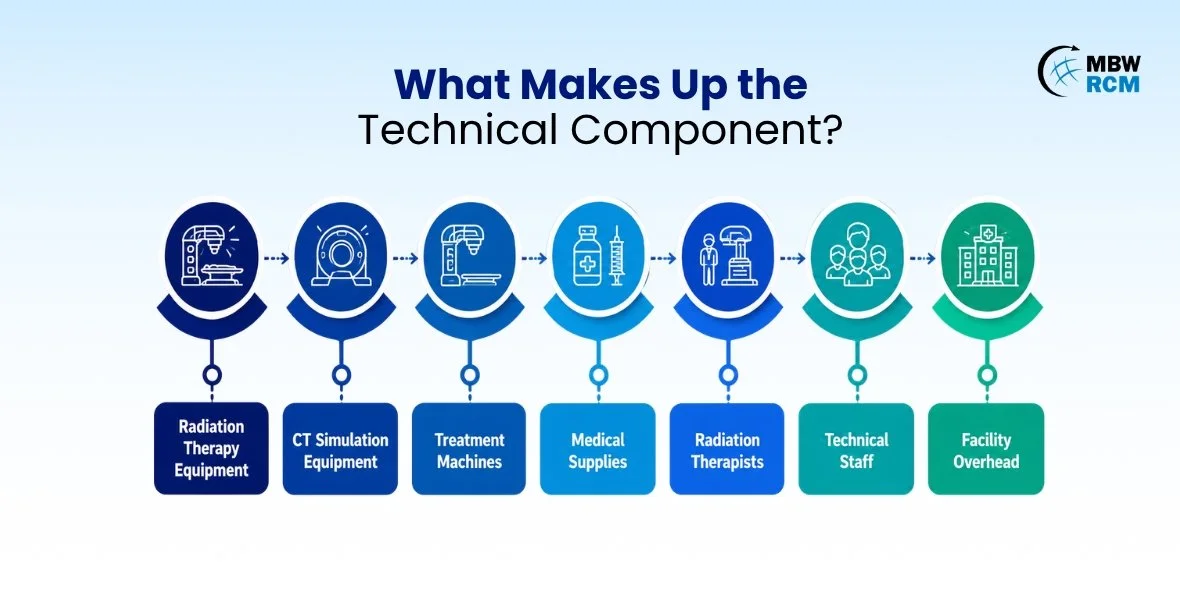
The technical component represents everything required to perform the procedure apart from the physician's professional expertise.
This includes:
Radiation therapy equipment
CT simulation equipment
Treatment machines
Medical supplies
Radiation therapists
Technical staff
Facility overhead
When only the technical portion is billable, the TC modifier may be required depending on the payer and billing circumstances.
Freestanding radiation oncology centers commonly bill the technical component because they own and operate the equipment used to provide treatment.
What Is Global Billing?
Global billing means both the professional and technical components are billed together under a single claim.
This typically occurs when the same organization provides:
Physician services
Equipment
Technical staff
Facility resources
Since both components are furnished by the same entity, billing is submitted globally instead of separately.
However, global billing isn't appropriate in every practice setting.
Hospital-Based Physicians vs. Freestanding Centers
One of the biggest reasons billing errors occur is confusion about where services are performed.
Hospital-Based Radiation Oncologists
Hospital-employed physicians generally provide the professional component of care.
The hospital usually owns the equipment, employs technical staff, and bills the technical component separately.
In many situations:
Physician bills the professional component.
Hospital bills the technical component.
Attempting to bill globally in these situations can create duplicate claims and reimbursement issues.
Freestanding Radiation Oncology Centers
Freestanding centers often provide both physician and technical services.
Because the practice owns the equipment and employs the clinical staff, it may be appropriate to bill globally when payer guidelines allow.
However, practices should always verify payer policies before claim submission, as billing requirements may vary.
How Place of Service Affects Billing
Place of Service (POS) plays a major role in determining how radiation oncology services should be billed.
Incorrect POS reporting can affect:
Payment amounts
Modifier requirements
Claim adjudication
Compliance
Audit risk
Common issues include:
Incorrect POS selection
Billing the wrong component
Inconsistent facility information
Mismatched documentation
Ensuring the correct POS is reported helps support accurate reimbursement and reduces unnecessary payer edits.
Common Billing Mistakes Practices Should Avoid
Even experienced billing teams can encounter component billing errors.
Some of the most common include:
Billing globally when only the professional component should be billed.
Missing Modifier 26 when required.
Incorrect use of the TC modifier.
Duplicate billing between physician and facility.
Incorrect place-of-service reporting.
Billing technical services the practice didn't provide.
Failing to verify payer-specific component billing rules.
Most of these issues are preventable with consistent documentation review and specialty-focused billing processes. Looking for more information on radiation oncology coding? Check out this helpful article on managing complex billing and coding challenges in radiation oncology.
Best Practices for Accurate Component Billing
Improving billing accuracy starts with understanding who provided each portion of the service.
Successful radiation oncology practices typically:
Verify ownership of equipment before billing.
Confirm the correct place of service.
Review physician documentation before coding.
Ensure Modifier 26 and TC are used appropriately.
Reconcile professional and facility claims.
Review payer-specific billing policies regularly.
Audit component billing for high-value services.
These steps help reduce denials while supporting accurate reimbursement.
Why Specialty Radiation Oncology Billing Matters
Professional and technical component billing can become increasingly complex as practices work across hospitals, outpatient departments, and freestanding treatment centers.
A specialty-focused radiation oncology billing team understands how physician services, facility billing, modifiers, place-of-service requirements, and payer policies work together. That expertise helps reduce billing errors, improve coding accuracy, minimize duplicate claims, and protect reimbursement across every stage of the revenue cycle.
Instead of reacting to denials after claims are submitted, experienced billing specialists identify potential issues before they impact revenue. Want to learn where treatment planning and course-of-treatment charges are most often missed? Read our guide on preventing revenue leakage in radiation oncology billing.
Improve Radiation Oncology Billing Accuracy
Professional and technical component billing affects far more than claim submission—it directly influences reimbursement, compliance, and the overall financial performance of your practice.
Whether your physicians work in a hospital setting, a freestanding radiation oncology center, or across multiple locations, having the right billing process in place helps ensure every eligible service is reported correctly the first time.
If your practice is experiencing denials related to Modifier 26, TC billing, place-of-service discrepancies, or component billing confusion, MBW RCM's Radiation Oncology Billing Services can help. Our specialty-focused team works with radiation oncology practices to improve coding accuracy, reduce claim errors, and strengthen reimbursement across every aspect of the revenue cycle.
Request a personalized Radiation Oncology Billing Assessment today and discover how specialty expertise can help protect every claim.
FAQs: Professional vs. Technical Component Billing in Radiation Oncology
Get Your Radiation Oncology Billing Assessment for Free
If your practice is experiencing missed charges, delayed reimbursement, or recurring billing inconsistencies, MBW RCM's Radiation Oncology Billing Services can help. Our specialty-focused team understands the complexities of radiation oncology revenue cycle management and works to improve charge capture, reduce denials, and strengthen financial performance from planning through the final treatment session.
Request a personalized Radiation Oncology Billing Assessment today and discover where your course-of-treatment billing may be leaving revenue behind.