
Type 2 Diabetes ICD-10 With Complication Codes Explained

Type 2 diabetes is a chronic condition that can lead to complications affecting multiple organs, including the kidneys, nerves, eyes, and blood vessels. In healthcare documentation, these conditions are classified using Type 2 diabetes ICD-10 codes under the E11 category, which includes combination codes that capture both the diabetes diagnosis and its related complications.
Understanding how Type 2 diabetes ICD-10 codes are categorized helps ensure that diabetes-related complications are properly documented and reported. This article explains the key ICD-10 codes used for common Type 2 diabetes complications and how they are applied in healthcare records.
Table of Contents
What Is the ICD-10 Code Category for Type 2 Diabetes?
All Type 2 diabetes codes fall under the ICD-10-CM category:
E11 – Type 2 Diabetes Mellitus
The E11 category contains multiple sub-codes that specify complications affecting different organ systems. These codes follow the ICD-10 principle of combination coding, meaning the diabetes condition and its complication are reported together.
When documentation clearly links the complication to diabetes, coders should select the appropriate E11 complication code instead of using E11.9.
Understanding the Type 2 diabetes ICD-10 with complication codes structure helps ensure more specific reporting and reduces claim denials.
Key ICD-10 Codes for Type 2 Diabetes With Complications
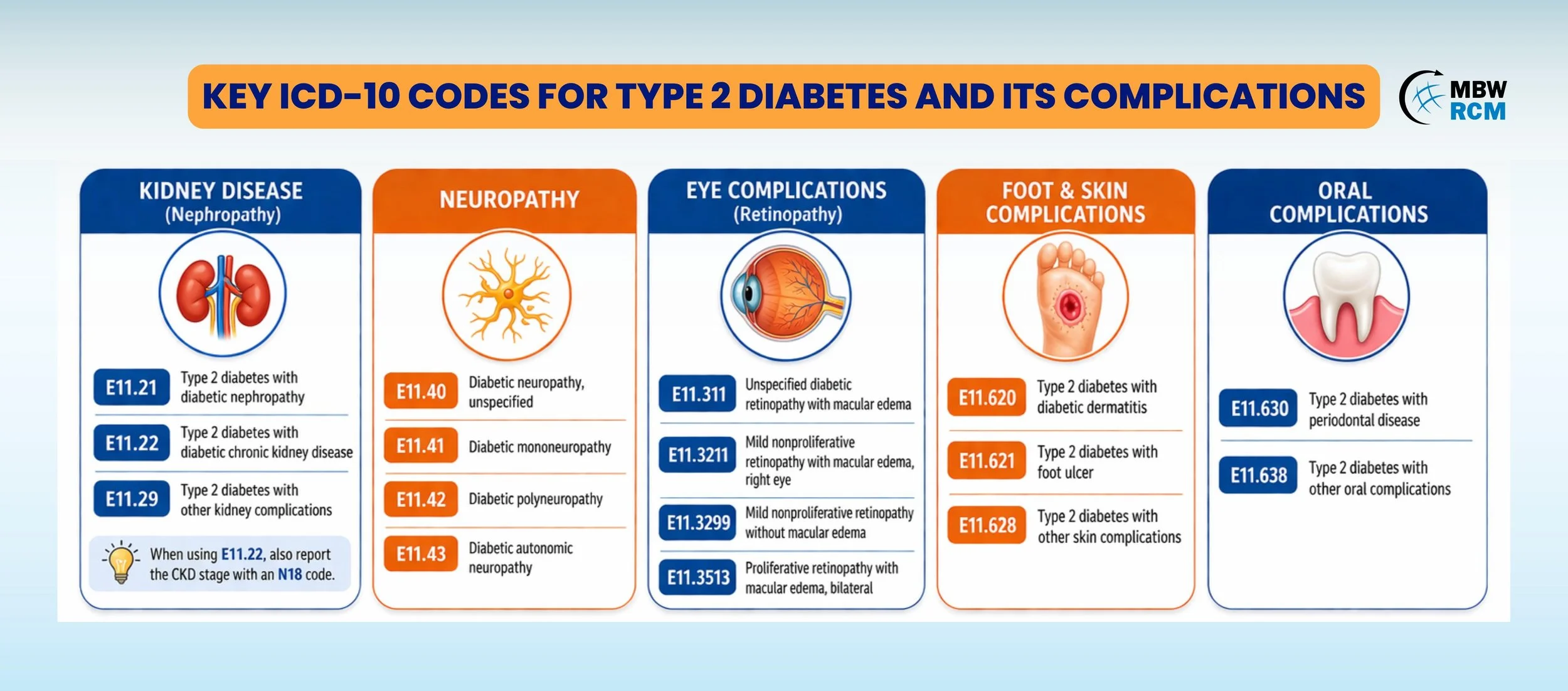
The ICD-10-CM classification groups complications of Type 2 diabetes into several major categories based on the affected organ system.
1. Diabetic Kidney Disease (Nephropathy)
Diabetic kidney disease is one of the most serious long-term complications of Type 2 diabetes. According to the CDC, approximately 30–40% of diabetic patients develop chronic kidney disease (CKD).
Common ICD-10 codes include:
Coding Example:
E11.22 – Type 2 diabetes with CKD
N18.3 – Chronic kidney disease stage 3
Proper reporting of Type 2 diabetes ICD-10 ensures proper documentation and risk adjustment for chronic kidney disease cases. Looking for a quick guide? Use this nephrology dialysis billing cheat sheet. It provides a quick overview of documentation, coding requirements, and reimbursement considerations for kidney-related services.
2. Diabetic Neuropathy
Diabetic neuropathy occurs when high blood glucose damages peripheral nerves. The American Diabetes Association reports that nearly 50% of long-term diabetic patients develop some form of neuropathy.
Common ICD-10 codes include:
A patient with Type 2 diabetes presents with diabetic polyneuropathy affecting the lower extremities.
Coding Example:
ICD-10 Code:E11.42 – Type 2 diabetes with diabetic polyneuropathy
This code captures the neurological complication associated with Type 2 diabetes ICD-10 with complication codes.
3. Diabetic Peripheral Circulatory Complications
Type 2 diabetes increases the risk of peripheral arterial disease and vascular complications due to long-term damage to blood vessels.
Common ICD-10 codes:
Peripheral vascular disease is a leading cause of diabetic foot complications and amputations, with studies indicating that diabetic patients have up to 10 times higher risk of lower-limb amputation.
Accurate use of Type 2 diabetes ICD-10 codes helps track these vascular complications.
4. Diabetic Eye Complications (Retinopathy)
Diabetic retinopathy is one of the most common causes of preventable blindness. The World Health Organization estimates that diabetic retinopathy accounts for approximately 4.8% of global blindness cases.
ICD-10 ophthalmic codes require detailed documentation including severity, macular edema, and laterality.
Common ICD-10 codes:
How This Condition Is Coded (Example):
A 58-year-old patient with Type 2 diabetes reports blurred vision. Examination confirms proliferative diabetic retinopathy with macular edema in the left eye.
ICD-10 Code:E11.3512 – Type 2 diabetes with proliferative diabetic retinopathy with macular edema, left eye. Need help coding eye-related complications? Check out our guide on Ophthalmology Billing and Coding for Retina, Cataract and Glaucoma Services to better understand documentation, coding, and reimbursement for ophthalmology procedures.
5. Diabetic Foot and Skin Complications
Skin complications are common in patients with poorly controlled diabetes. These complications may include dermatitis, foot ulcers, and infections.
Common ICD-10 codes:
When coding E11.621, coders must also include an additional code describing the ulcer site and severity.
For Instance:
A patient with long-standing Type 2 diabetes develops a non-pressure ulcer on the right foot during a routine clinical evaluation. The ulcer extends to the fat layer.
Codes reported:
E11.621 – Type 2 diabetes with foot ulcer
L97.512 – Non-pressure chronic ulcer of right foot with fat layer exposed
Looking for more guidance on coding and billing for diabetic foot conditions, check out our guide on diabetic foot care billing covering documentation, coding requirements, and reimbursement.
6. Diabetic Oral Complications
Diabetes can significantly impact oral health, particularly periodontal disease. Studies show that diabetic patients are nearly three times more likely to develop severe periodontal disease.
Relevant ICD-10 codes include:
Each group contains specific codes that identify the complication and, in some cases, require additional codes to specify severity or stage.
These categories form the foundation of Type 2 diabetes ICD-10 with complication codes, enabling precise clinical documentation.
How to Code Type 2 Diabetes with Multiple Complications
Patients with Type 2 diabetes may develop complications affecting multiple organs. According to ICD-10-CM guidelines, coders should report a separate E11 combination code for each documented complication.
For example, a patient may have diabetic polyneuropathy and chronic kidney disease (CKD) due to Type 2 diabetes.
ICD-10 Coding Example
E11.42 – Type 2 diabetes with diabetic polyneuropathy
E11.22 – Type 2 diabetes with diabetic chronic kidney disease
N18.3 – Chronic kidney disease stage 3
Using multiple codes when appropriate ensures that Type 2 diabetes ICD-10 codes fully capture all documented complications.
Documentation Best Practices for Coding Diabetes Complications
Clear and detailed clinical documentation is essential for correctly assigning Type 2 diabetes ICD-10 codes. Proper documentation ensures that each diabetes-related condition is accurately captured and supports compliant medical coding.
Key Documentation Best Practices:
Clearly document the diabetes type (e.g., Type 2 diabetes mellitus).
Specify the exact diabetes-related complication (neuropathy, CKD, retinopathy, foot ulcer, etc.).
Link the complication to diabetes using terms such as diabetic neuropathy or diabetic retinopathy.
Include severity or stage when applicable (e.g., CKD stage, retinopathy severity).
Document site and laterality when required (e.g., right eye, left foot).
Following these practices supports precise reporting of Type 2 diabetes ICD-10 with complication codes.
Need Help with Diabetes ICD-10 Coding and Billing?
Coding Type 2 diabetes with complications can be complex, especially when multiple conditions must be documented and reported correctly. Our medical billing and coding specialists help practices ensure accurate ICD-10 coding, reduce claim denials, and improve reimbursement performance.
Conclusion:
Proper coding of diabetes complications plays a critical role in clinical documentation, reimbursement accuracy, and chronic disease management. By understanding the ICD-10 structure and using the correct combination codes, medical coders can ensure that patient records accurately reflect the severity and impact of Type 2 diabetes.
Complex ICD-10 coding slowing your revenue cycle? Let our Specialty Medical Billing Services handle the complexity and improve claim accuracy. Contact us today for expert support.
FAQs: Type 2 Diabetes ICD-10 Coding
Start Using the Right ICD-10 Codes for Diabetes Complications
This Type 2 diabetes ICD-10 guide helps identify the correct codes for diabetes-related complications affecting organs such as the kidneys, nerves, eyes, and skin. Clear documentation of the diabetes type and the associated complication is essential when selecting the appropriate E11 combination code.
Understanding when additional codes are required—such as CKD stage codes (N18) or ulcer location codes (L97)—helps improve documentation accuracy and supports consistent reporting of diabetes complications.
