
Top 20 Kidney CPT Codes Used in Nephrology Care
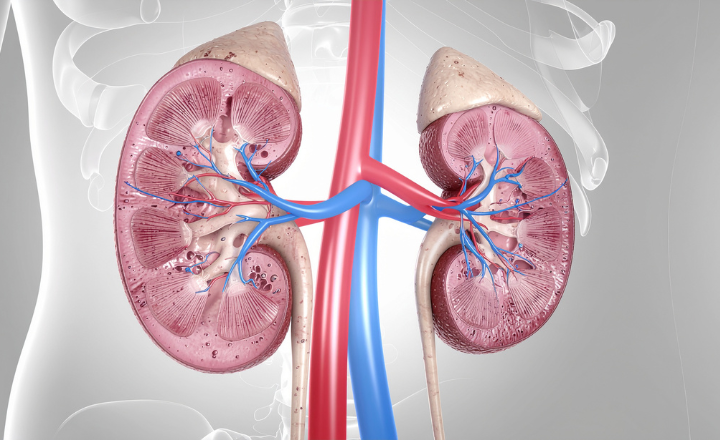
Kidney CPT codes used in nephrology cover dialysis, ESRD management, office and hospital E/M services, kidney biopsy, and renal imaging. Code selection depends on the service, dialysis modality, patient age, visit frequency, and treatment setting.
Several codes belong to closely related families. For example, 90960–90962 differ by monthly face-to-face visit frequency, while 76770 and 76775 distinguish complete from limited retroperitoneal ultrasound examinations.
Here are 20 CPT codes commonly used in nephrology billing and kidney care, including kidney-specific procedures and E/M services reported by nephrologists.
Table of Contents
1. CPT 90935 — Hemodialysis With Single Evaluation
CPT 90935 is used for a hemodialysis procedure with a single evaluation by a physician or other qualified healthcare professional.
It differs from 90937, which applies when repeated evaluation is required during the dialysis procedure. Code selection should reflect the evaluation actually performed rather than the patient's diagnosis or dialysis frequency alone.
Accurate reporting helps ensure the submitted dialysis claim reflects the level of professional evaluation provided during the session.
2. CPT 90937 — Hemodialysis With Repeated Evaluation
CPT 90937 applies when hemodialysis requires repeated physician or qualified healthcare professional evaluation, with or without substantial revision of the dialysis prescription.
The service performed should support the repeated evaluation rather than simply containing multiple documentation entries. The record should establish that repeated evaluation occurred during the dialysis procedure and supports reporting 90937 instead of 90935.
Clear differentiation between single and repeated evaluation helps prevent incorrect reporting within the hemodialysis code family.
3. CPT 90945 — Dialysis Other Than Hemodialysis
CPT 90945 covers a dialysis procedure other than hemodialysis with a single physician or qualified healthcare professional evaluation.
It may apply to services such as peritoneal dialysis when the circumstances meet the applicable code requirements. The dialysis modality and single evaluation should align with the service reported on the claim.
Confirming the dialysis method is particularly important when selecting between hemodialysis and non-hemodialysis procedure codes.
4. CPT 90947 — Non-Hemodialysis, Repeated Evaluation
CPT 90947 applies to dialysis other than hemodialysis when repeated evaluation is required.
The primary difference between 90945 and 90947 is whether the service involves a single or repeated evaluation. Reporting 90947 therefore requires support for the additional evaluation component during the dialysis service.
Correct classification helps keep the reported CPT code consistent with the professional services provided during treatment.
5. CPT 90960 — Monthly ESRD Management, 4+ Visits
CPT 90960 is used for monthly ESRD-related services for patients 20 years or older when the physician or qualified healthcare professional provides four or more face-to-face visits during the month.
Accurate visit capture matters because the number of qualifying encounters determines the applicable monthly ESRD code. Missing even one qualifying encounter can affect whether 90960 or another code in the monthly ESRD family is supported.
Monthly encounter reconciliation can help verify that the reported code corresponds to the qualifying visit frequency. If you’re interested in learning more about nephrology billing, take a look at this blog on nephrology billing guidelines for ESRD and dialysis.
6. CPT 90961 — Monthly ESRD Services, 2–3 Visits
CPT 90961 applies to monthly ESRD-related services for patients age 20 or older with two to three face-to-face visits during the month.
It belongs to the same monthly dialysis management family as 90960 and 90962, with visit frequency determining code selection. Practices should reconcile qualifying monthly encounters before the final ESRD charge is reported.
The total qualifying visit count should therefore be confirmed at the end of the reporting period before selecting the monthly code.
7. CPT 90962 — Monthly ESRD Services, 1 Visit
CPT 90962 applies to monthly ESRD-related services for patients age 20 or older when one face-to-face visit occurs during the month.
For 90960, 90961, and 90962, accurate encounter capture is important because qualifying visit frequency changes the reportable CPT code. The Nephrology EHR should accurately reflect the encounters supporting monthly ESRD coding.
A missed or incorrectly recorded encounter can therefore affect which monthly management code reaches the claim. Reconciling the EHR encounter history with the billing record can help identify these differences before submission.
8. CPT 90966 — Monthly Home Dialysis Services
CPT 90966 is used for monthly ESRD-related services for patients 20 years or older receiving home dialysis.
The patient's dialysis modality and monthly management should support use of the home dialysis code rather than an in-center monthly ESRD code. This distinction is particularly important when a patient's dialysis setting or modality changes during the course of care.
Changes between home and facility-based dialysis should be accurately reflected before the monthly ESRD service is reported.
9. CPT 90970 — Partial-Month ESRD Services
CPT 90970 is used for ESRD-related services for patients age 20 or older when management covers less than a full month.
Unlike the full-month MCP codes, 90970 is reported on a per-day basis when the applicable requirements are met. Partial-month situations can arise when responsibility for ESRD management begins or ends during the month, subject to applicable coding requirements.
The dates of management should therefore align with the number of service days reported on the claim.
10. CPT 99204 — New Patient Office Visit
CPT 99204 is used for a new outpatient encounter when the medical decision making (MDM) or applicable total time supports this E/M level.
In nephrology, it may apply to new patients evaluated for CKD, renal dysfunction, hypertension, or other kidney-related conditions. New-patient status and the applicable E/M requirements should both be established before 99204 is selected.
The presenting renal condition alone should not determine the E/M level without support for the applicable MDM or time criteria.
11. CPT 99205 — High-Level New Patient Office Visit
CPT 99205 represents a higher-level new patient outpatient E/M service.
The severity of kidney disease alone does not determine the code. The encounter must meet the applicable high-level MDM or time requirements. Complex renal disease can contribute to MDM, but the complete encounter must support the level billed.
Careful differentiation between 99204 and 99205 can help prevent overcoding or undercoding of complex new-patient nephrology encounters.
12. CPT 99214 — Established Patient Office Visit
CPT 99214 is commonly used for established outpatient follow-up when the encounter supports moderate MDM or applicable time.
It may be relevant to ongoing CKD management, hypertension, electrolyte disorders, medication management, and other renal conditions. The code should reflect the work performed during that encounter rather than being selected routinely for nephrology follow-up visits.
Changes in renal function, medication management, and associated conditions can affect MDM but should be evaluated within the complete E/M requirements.
13. CPT 99215 — High-Level Established Patient Visit
CPT 99215 is used for an established outpatient encounter requiring high-level MDM or applicable time.
The service must support the higher E/M level rather than relying only on the severity of the patient's renal diagnosis. This distinction is important when choosing between 99214 and 99215 for established nephrology patients.
Higher clinical complexity does not automatically support 99215 unless the applicable E/M criteria for the encounter are met. If you’re interested in learning more about nephrology billing, take a look at this blog on nephrology RCM: in-house vs. outsourced.
14. CPT 99222 — Initial Hospital / Observation Care
CPT 99222 applies to qualifying initial hospital inpatient or observation care.
Nephrologists may report this code when managing acute kidney injury, CKD complications, fluid imbalance, electrolyte abnormalities, or other renal conditions when the encounter supports the applicable E/M requirements.
The hospital setting alone does not establish the level; the applicable MDM or time criteria still determine code selection. This is especially relevant when differentiating initial hospital E/M levels for renal consultations and management.
15. CPT 99223 — High-Level Initial Hospital Care
CPT 99223 represents a higher level of initial hospital inpatient or observation care.
The medical decision making or applicable time must support the higher service level rather than the kidney diagnosis alone determining code selection. This can be particularly relevant for complex inpatient renal cases involving multiple conditions or significant management decisions.
The complete encounter should support the higher level before 99223 is reported instead of another initial hospital care code.
16. CPT 99232 — Subsequent Hospital Care
CPT 99232 is used for subsequent hospital inpatient or observation care when the MDM or applicable time supports the code.
It may apply when nephrologists continue managing renal conditions following the initial hospital encounter. Each subsequent encounter should be coded according to the work performed that day rather than automatically carrying forward the initial level of service.
Daily changes in kidney function or treatment do not automatically determine the code unless the overall encounter supports the applicable E/M level.
17. CPT 99233 — High-Level Subsequent Hospital Care
CPT 99233 represents a higher-level subsequent hospital inpatient or observation service.
The encounter must meet the applicable higher MDM or time requirements when this code is reported. A change in renal status, treatment decisions, or other clinical complexity may affect MDM, but the complete encounter must support 99233.
This distinction is particularly important when choosing between 99232 and 99233 during ongoing inpatient nephrology management.
18. CPT 50200 — Percutaneous Kidney Biopsy
CPT 50200 is used for a percutaneous renal biopsy performed using a needle or trocar.
Imaging guidance, when applicable, has separate coding considerations and should be evaluated according to current CPT and payer requirements. The biopsy code and any separately reportable imaging service should therefore be reviewed for applicable bundling and coding edits before claim submission.
Correct coding also requires distinguishing the renal biopsy itself from other diagnostic or imaging services performed during the encounter.
19. CPT 76770 — Complete Retroperitoneal Ultrasound
CPT 76770 represents a complete retroperitoneal ultrasound examination.
For urinary tract evaluation, the examination must meet the requirements of a complete study. The code should not be selected simply because both kidneys were visualized.
The extent of the examination is what separates a complete retroperitoneal study from the limited service represented by 76775. Reporting 76770 therefore requires the performed examination to meet the applicable complete-study requirements.
20. CPT 76775 — Limited Retroperitoneal Ultrasound
CPT 76775 represents a limited retroperitoneal ultrasound examination.
It applies when the examination performed does not meet the requirements of a complete retroperitoneal study. Correctly distinguishing the extent of the examination helps prevent reporting a complete study when only a limited service was performed.
Among commonly used Kidney Ultrasound CPT Codes, 76770 and 76775 require careful distinction because code selection depends on whether the retroperitoneal examination is complete or limited. This difference can directly affect how the renal ultrasound service is reported and processed on the claim.
Kidney CPT Codes at a Glance
The 20 CPT codes can be grouped according to the nephrology service being reported.
Similar Kidney CPT Codes That Should Not Be Interchanged
Several kidney CPT codes describe closely related services but have different reporting requirements. The differences are particularly important for dialysis management, E/M services, and renal imaging.
90935 vs. 90937
90935 involves a single evaluation during hemodialysis, while 90937 involves repeated evaluation.90945 vs. 90947
90945 involves a single evaluation for dialysis other than hemodialysis, while 90947 involves repeated evaluation.90960 vs. 90961 vs. 90962
For patients age 20 or older, these monthly ESRD codes differ by face-to-face visit frequency: 4+ visits, 2–3 visits, and 1 visit, respectively.99214 vs. 99215
Both apply to established outpatient E/M services, but they represent different levels based on MDM or applicable time.99232 vs. 99233
Both apply to subsequent hospital inpatient or observation care but have different MDM or time requirements.76770 vs. 76775
76770 represents a complete retroperitoneal ultrasound, while 76775 represents a limited examination.
These distinctions are important in nephrology RCM, as incorrect code selection can trigger payer edits, payment variances, documentation requests, and coding-related denials.
Getting Kidney CPT Codes Right in Nephrology Billing
The top 20 kidney CPT codes used in nephrology care cover dialysis, ESRD management, outpatient and hospital E/M, renal biopsy, and kidney ultrasound. Correct reporting requires understanding the differences within each code family.
For dialysis, key factors include evaluation frequency, monthly visits, patient age, home dialysis, and partial-month services. E/M codes depend on MDM or time, while Kidney Ultrasound CPT Codes 76770 and 76775 distinguish complete from limited examinations.
Accurate nephrology billing starts with selecting the CPT code that reflects the service performed. MBW RCM supports nephrology practices with specialty billing and coding services designed to improve claim accuracy and help reduce coding-related reimbursement issues.
FAQs on Kidney CPT Codes in Nephrology
Request a Nephrology Coding Review
Even small CPT coding differences can affect how nephrology claims are processed and reimbursed. MBW RCM reviews dialysis, ESRD, E/M, kidney procedures, and renal imaging coding to identify discrepancies that may be contributing to denials or payment issues. Fill out the form below to have your nephrology coding requirements reviewed.
