
COPD and Asthma ICD-10 — Distinguishing Acute vs. Chronic
The COPD and asthma ICD-10 classification distinguishes acute and chronic conditions by using specific codes that indicate whether the disease is stable, experiencing an acute exacerbation, or associated with complications. COPD is categorized under J44, while asthma is classified under J45, with additional codes used to identify exacerbations, infections, or severe episodes such as status asthmaticus.
This guide explains how COPD and asthma ICD-10 codes differentiate acute versus chronic conditions, how acute episodes are identified, and the documentation elements that support accurate diagnosis reporting.
Table of Contents
Understanding COPD and Asthma in ICD-10 Classification
COPD and asthma are both respiratory diseases that affect airflow in the lungs. However, they differ in disease progression, causes, and documentation requirements.
The ICD-10 system categorizes these conditions into separate groups to ensure accurate reporting in clinical documentation, healthcare records, and insurance claims.
Understanding how these diagnoses are structured in the COPD and asthma ICD-10 classification system helps healthcare providers maintain accurate medical records and consistent documentation practices.
COPD ICD-10 Codes and Classification
In the ICD-10-CM classification system, Chronic Obstructive Pulmonary Disease (COPD) is categorized under Category J44 – Other Chronic Obstructive Pulmonary Disease within the respiratory diseases chapter. This category distinguishes COPD based on whether the condition is stable, experiencing an acute exacerbation, or associated with a respiratory infection.
Common COPD ICD-10 Codes
These codes help indicate whether the patient’s COPD is stable, exacerbated, or linked to a respiratory infection. When infections such as pneumonia or bronchitis are documented, an additional diagnosis code is typically used to identify the specific infection.
Accurate classification ensures COPD diagnoses are properly documented within the COPD and asthma ICD-10 coding framework.
Asthma ICD-10 Codes and Classification
In the ICD-10-CM classification system, asthma is categorized under Category J45 – Asthma within the respiratory diseases chapter. This category classifies asthma based on severity and the presence of complications, such as acute exacerbation or status asthmaticus. Clear documentation of asthma severity and current condition helps ensure accurate diagnosis reporting.
Common Asthma ICD-10 Codes
These codes help indicate whether the patient’s asthma is intermittent, persistent, experiencing an acute exacerbation, or associated with a severe complication such as status asthmaticus.
Proper classification of asthma in ICD-10 helps identify asthma severity levels and complications such as acute exacerbation or status asthmaticus, ensuring the condition is clearly reflected in the patient’s diagnosis.
Acute vs. Chronic Conditions in ICD-10 Coding
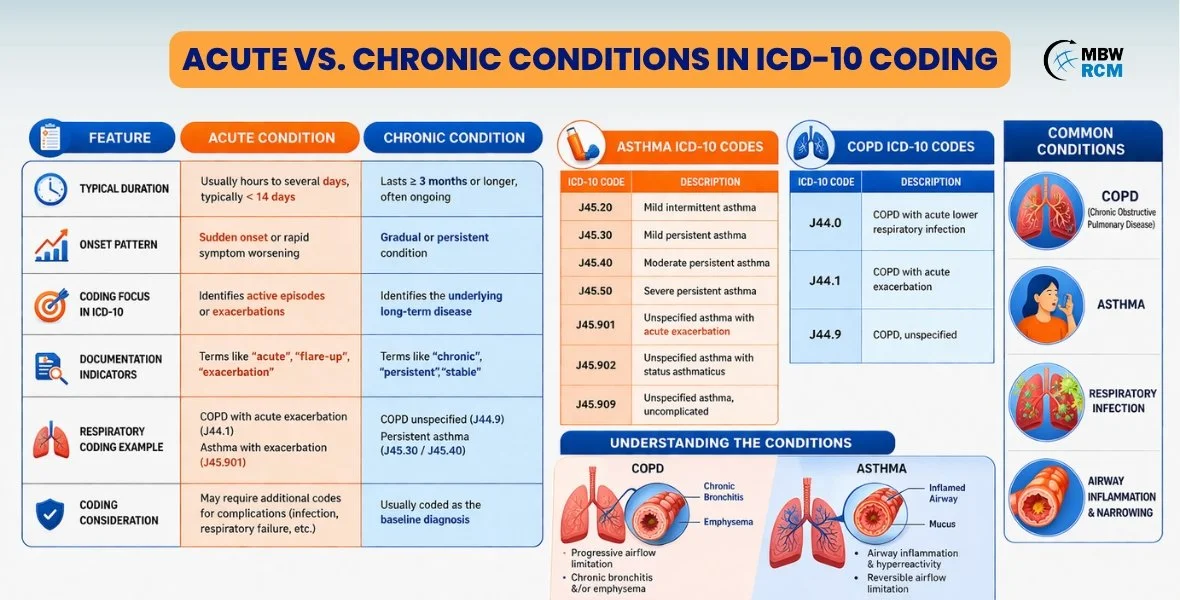
In the ICD-10-CM classification system, distinguishing between acute and chronic conditions helps indicate whether a diagnosis represents a short-term episode or a long-standing disease. For respiratory conditions such as COPD and asthma, ICD-10 codes may vary depending on whether the condition is stable or experiencing an acute exacerbation.
Acute conditions typically reflect a sudden onset or temporary worsening of symptoms, while chronic conditions represent persistent diseases that continue over months or years.
Key Differences Between Acute and Chronic Conditions in ICD-10
ICD-10 allows both the chronic condition and any acute exacerbation to be recorded when applicable, helping reflect the patient’s current respiratory status.
How ICD-10 Identifies Acute Episodes in COPD and Asthma
In the ICD-10-CM system, acute episodes of chronic respiratory diseases are identified using specific diagnosis codes that indicate exacerbations or complications. For conditions such as COPD and asthma, ICD-10 differentiates between the baseline chronic disease and an acute worsening of symptoms.
These codes help indicate that the patient’s condition is currently experiencing a flare-up, infection, or severe complication, rather than representing stable disease.
Acute Exacerbations in COPD
ICD-10 identifies COPD exacerbations using codes that indicate a worsening of the underlying chronic condition.
If a respiratory infection such as pneumonia or bronchitis is present, an additional code is typically required to specify the infection. You can review the detailed ICD-10 guidance for COPD with acute exacerbation in this reference for J44.1 – COPD with acute exacerbation to better understand how these conditions are identified.
Acute Asthma Episodes
Asthma flare-ups are identified in ICD-10 using codes that indicate acute exacerbation or severe asthma complications.
Status Asthmaticus
Status asthmaticus represents a severe form of asthma exacerbation and is classified separately in ICD-10 to indicate increased severity of the episode.
Can COPD and Asthma Occur Together in ICD-10?
In the COPD and asthma ICD-10 classification, these two respiratory conditions are categorized under separate sections, which allows both diagnoses to be identified when they are documented in the patient’s record. Each condition has its own category and code structure within the respiratory chapter.
In ICD-10:
COPD is categorized under J44 – Other Chronic Obstructive Pulmonary Disease
Asthma is categorized under J45 – Asthma
When both conditions are documented, each diagnosis can be reported using the appropriate ICD-10 codes.
Example ICD-10 Codes When Both Conditions Are Present:
ICD-10 also includes Excludes1 notes for certain conditions within the COPD category, which means some diagnoses should not be reported together if they represent the same condition. Reviewing these notes helps ensure the correct use of COPD and asthma codes.
Understanding how COPD and asthma are represented within ICD-10 helps ensure that each condition is accurately identified when both are documented in the patient’s diagnosis.
Best Documentation Practices for COPD and Asthma ICD-10
Clear documentation helps support the correct selection of COPD and asthma ICD-10 codes. The diagnosis should include details aligned with the respiratory categories J44 (COPD) and J45 (Asthma) so the condition is reported with the appropriate level of specificity.
Specify the Exact Respiratory Diagnosis
The diagnosis should clearly indicate whether the condition is COPD or asthma, as each belongs to a different ICD-10 category (J44 or J45).
Indicate Exacerbation Status
Documentation should state whether the condition is stable or experiencing an acute exacerbation, which determines whether baseline or exacerbation-specific codes are applied.
Identify COPD with Associated Infection
When COPD occurs with a lower respiratory infection, the diagnosis should identify the infection so J44.0 can be reported along with an additional infection code.
Record Asthma Severity
Asthma documentation should include the severity classification (mild intermittent, mild persistent, moderate persistent, or severe persistent) to determine the appropriate code within J45.
Document Severe Asthma Conditions
If status asthmaticus is present, it should be clearly indicated so the correct ICD-10 code for severe asthma episodes can be reported.
Need Help with COPD and Asthma ICD-10 Coding and Billing?
Coding respiratory conditions like COPD and asthma accurately can be challenging, especially when distinguishing acute exacerbations from chronic conditions. Our pulmonology billing specialists help ensure precise ICD-10 coding, reduce claim denials, and improve reimbursement performance.
Conclusion:
Understanding the COPD and asthma ICD-10 distinctions between acute and chronic conditions helps ensure respiratory diagnoses are identified with the correct codes under J44 and J45. Recognizing exacerbations, infections, and asthma severity allows these conditions to be reported with the appropriate level of specificity.
For healthcare organizations handling respiratory diagnoses, expert support can improve efficiency and accuracy. Our Pulmonology Billing Services help streamline respiratory coding and reporting processes.
Contact MBW RCM today to learn how we can support your pulmonology billing and coding needs.
FAQs: COPD and Asthma ICD-10 Coding
Get A Quote
Check for hidden revenue leaks in your practice with a free practice audit. Our team will review your pulmonology billing process and identify areas that may impact reimbursement.
Fill out the form to connect with our experts and explore how our Pulmonology Billing Services can support efficient billing and stronger revenue performance.
