Top 10 EMR Systems List of 2026
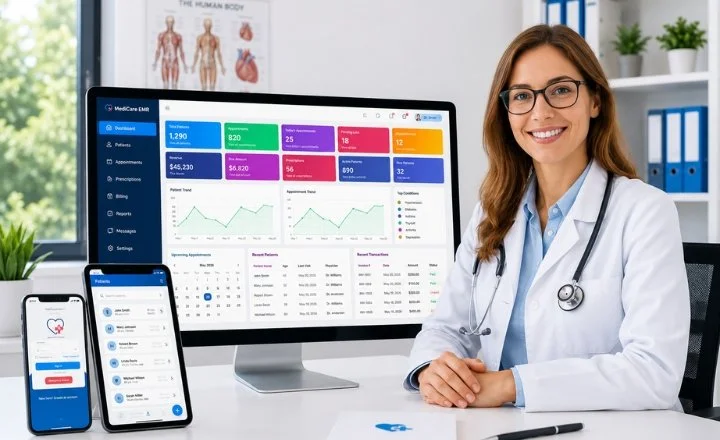
The following are the top-performing EMR software platforms transforming healthcare operations, patient care, medical billing, and revenue cycle management in 2026. These Electronic Medical Record systems are helping healthcare organizations improve workflow efficiency, streamline clinical documentation, strengthen interoperability, and optimize financial performance across hospitals, physician groups, specialty clinics, and independent practices.
The Top 10 EMR Systems List of 2026 includes Epic Systems, Cerner (Oracle Health), athenahealth, eClinicalWorks, NextGen Healthcare, Meditech Expanse, Allscripts (Veradigm), Greenway Health, DrChrono, and Kareo Clinical. These Electronic Medical Record systems are leading the healthcare industry with AI-powered charting, telehealth integration, medical billing automation, interoperability, patient engagement tools, and cloud-based healthcare management.
Healthcare providers in 2026 are increasingly adopting advanced EMR software to improve clinical workflows, reduce administrative burden, streamline medical billing, optimize revenue cycle management, and improve patient outcomes. The best EMR software platforms now combine Electronic Health Records (EHR), practice management, telehealth, healthcare analytics, and revenue cycle management into a single integrated ecosystem.
Selecting the right Electronic Medical Record system can help hospitals, physician groups, specialty clinics, and independent practices increase operational efficiency, improve reimbursement rates, reduce claim denials, and enhance patient satisfaction.
Table of Contents
What Is an EMR System?
An Electronic Medical Record (EMR) system is a digital healthcare platform used to create, store, manage, and access patient medical records electronically. EMR software replaces traditional paper-based records and helps healthcare providers improve documentation accuracy, streamline workflows, and enhance communication across healthcare teams.
Modern EMR software goes far beyond simple digital recordkeeping. Today’s healthcare technology platforms integrate multiple operational and clinical functions into one centralized system.
Advanced EMR systems typically include:
Clinical documentation
Patient scheduling
Electronic prescribing
Medical billing and coding
Claims management
Telehealth integration
Laboratory and pharmacy integration
Revenue cycle management
Patient engagement portals
Healthcare analytics and reporting
By implementing the right Electronic Medical Record system, healthcare organizations can improve patient outcomes, increase workflow efficiency, reduce administrative costs, and strengthen financial performance.
The following are the top 10 EMR systems leading the healthcare industry in 2026. These Electronic Medical Record platforms are helping hospitals, physician groups, specialty clinics, and independent healthcare providers improve patient care, streamline workflows, automate medical billing, and optimize revenue cycle management through advanced healthcare technology and interoperability solutions.
To learn more about specialty billing EMR solutions, read our blog on “Choosing the Best Gastroenterology EMR with Integrated Billing.”
1. Epic Systems
Epic Systems continues to dominate the healthcare technology market in 2026. Widely used by large hospitals, academic medical centers, and enterprise healthcare systems, Epic provides one of the most comprehensive Electronic Medical Record platforms available.
The platform offers advanced interoperability, AI-powered clinical documentation, predictive healthcare analytics, telehealth integration, patient engagement tools, and revenue cycle management capabilities.
Key Features
AI-assisted charting
Integrated telehealth platform
Advanced healthcare analytics
Population health management
Interoperability tools
Revenue cycle management integration
Patient engagement portals
Medical billing automation
Advantages
Epic delivers enterprise-level scalability and seamless data exchange across healthcare systems. Its robust analytics and automation tools help healthcare organizations improve operational efficiency and patient outcomes.
Limitations
Epic requires a substantial implementation budget and extensive staff training, making it less suitable for smaller practices.
Best For
Enterprise hospitals
Academic medical centers
Multi-location healthcare organizations
2. Cerner (Oracle Health)
Cerner, now integrated into Oracle Health, has evolved into a cloud-native healthcare technology platform focused on AI automation, interoperability, and healthcare analytics.
The system supports advanced patient management, predictive analytics, and revenue cycle optimization for large healthcare organizations.
Key Features
Cloud-based EMR infrastructure
AI-powered documentation
Predictive healthcare analytics
Voice recognition tools
Medical billing automation
Healthcare interoperability
Revenue cycle management integration
Advantages
Cerner provides strong data integration capabilities and intelligent automation features that reduce administrative burden and improve healthcare operations.
Limitations
The platform can be technically complex and may require significant customization during implementation.
Best For
Large healthcare systems
Government healthcare organizations
Enterprise physician networks
3. athenahealth
athenahealth remains one of the best cloud-based EMR systems for independent practices and ambulatory healthcare providers. Its intuitive user interface and integrated medical billing tools make it a popular choice for small and mid-sized practices.
Key Features
Cloud-based Electronic Medical Records
Integrated medical billing software
Telehealth capabilities
Automated claims management
Patient scheduling tools
Revenue cycle management integration
Mobile accessibility
Advantages
athenahealth offers fast implementation, minimal IT infrastructure requirements, and user-friendly workflows that improve operational efficiency.
Limitations
Customization capabilities may be limited for organizations with highly specialized workflow requirements.
Best For
Independent physicians
Ambulatory care clinics
Small healthcare practices
4. eClinicalWorks
eClinicalWorks is a comprehensive healthcare management platform offering Electronic Medical Records, telehealth services, patient engagement tools, and medical billing automation.
Its AI-powered healthcare technology helps providers improve clinical documentation accuracy while streamlining administrative operations.
Key Features
AI-powered virtual assistant
Telehealth integration
Electronic prescribing
Healthcare analytics
Population health management
Revenue cycle management tools
Practice management integration
Advantages
The platform offers strong telehealth capabilities and cost-effective healthcare management solutions for growing healthcare organizations.
Limitations
Some users report occasional interface complexity and customer support delays.
Best For
Multi-specialty clinics
Telemedicine providers
Mid-sized healthcare organizations
5. NextGen Healthcare
NextGen Healthcare specializes in specialty-specific EMR software designed for practices with customized workflow requirements.
The platform offers flexible healthcare management tools tailored for behavioral health, orthopedics, cardiology, and other specialty healthcare providers.
Key Features
Specialty-specific EMR templates
Mobile charting tools
Integrated practice management
Telehealth support
Healthcare analytics
Patient engagement solutions
Interoperability capabilities
Advantages
NextGen offers highly customizable workflows that support specialized clinical operations.
Limitations
Customization may increase onboarding complexity and training requirements.
Best For
Specialty medical practices
Behavioral health clinics
Orthopedic and cardiology providers
To read more about integrated EMR solutions for healthcare practices, have a look at this blog on “EMR Systems List: Complete Guide.”
6. Meditech Expanse
Meditech Expanse is a cost-effective EMR platform designed for hospitals and regional healthcare systems seeking modern healthcare technology without excessive implementation costs.
Key Features
Web-based EMR platform
AI-assisted clinical workflows
Real-time healthcare reporting
Patient engagement tools
Healthcare interoperability
Integrated analytics
Advantages
Meditech offers strong clinical functionality while maintaining a lower total cost of ownership.
Limitations
The platform may have fewer third-party integrations compared to enterprise competitors.
Best For
Community hospitals
Regional healthcare providers
Mid-sized hospital systems
7. Allscripts (Veradigm)
Veradigm, formerly Allscripts, focuses heavily on healthcare interoperability and open API integrations.
Its flexible healthcare ecosystem allows organizations to connect third-party healthcare applications efficiently.
Key Features
Open API infrastructure
Clinical decision support
Healthcare analytics
Electronic prescribing
Medical billing integration
Patient engagement tools
Advantages
The platform supports extensive customization and strong interoperability between healthcare technologies.
Limitations
The user interface may feel outdated compared to newer cloud-based EMR systems.
Best For
Data-driven healthcare organizations
Integrated healthcare systems
Large physician networks
8. Greenway Health
Greenway Health continues to support smaller healthcare organizations with affordable and scalable Electronic Medical Record solutions.
The platform combines medical billing, scheduling, telehealth, and patient engagement tools within a user-friendly healthcare ecosystem.
Key Features
Medical billing automation
Telehealth support
Practice management integration
Claims management tools
Mobile charting
Patient portals
Advantages
Greenway Health provides cost-effective healthcare management tools for smaller medical practices.
Limitations
Enterprise scalability remains limited compared to larger healthcare software platforms.
Best For
Family medicine practices
Rural healthcare providers
Independent clinics
9. DrChrono
DrChrono is a mobile-first Electronic Medical Record platform designed for modern healthcare providers who require flexibility and mobility.
Its cloud-based infrastructure supports telehealth, medical billing, electronic prescribing, and mobile healthcare management.
Key Features
Mobile EMR functionality
Integrated medical billing
Telemedicine capabilities
Electronic prescribing
Custom healthcare templates
Advantages
DrChrono delivers excellent mobile usability and simplified healthcare workflows.
Limitations
The platform may lack some advanced enterprise-level analytics capabilities.
Best For
Concierge medicine providers
Mobile healthcare practices
Small physician groups
10. Kareo Clinical
Kareo Clinical remains a leading cloud-based EMR solution for independent healthcare providers and growing medical practices.
The platform combines Electronic Medical Records, billing automation, scheduling, and claims management within a simplified healthcare management system.
Key Features
Cloud-based EMR platform
Medical billing integration
Claims management
Appointment scheduling
Telehealth support
Revenue cycle management tools
Advantages
Kareo offers affordable healthcare software solutions with easy onboarding and simplified workflows.
Limitations
The platform may not support the advanced scalability requirements of enterprise healthcare systems.
Best For
Independent physicians
Small healthcare clinics
Startup medical practices
Hello, World!
EMR Systems Are Reshaping Healthcare in 2026
| EMR System | Best For | Key Strength |
|---|---|---|
| Epic Systems | Large hospitals & enterprise systems | Advanced interoperability and scalability |
| Cerner (Oracle Health) | Large healthcare networks | AI-powered analytics and cloud infrastructure |
| athenahealth | Small and mid-sized practices | Cloud workflow and billing tools |
| eClinicalWorks | Multi-specialty clinics | Telehealth and practice management |
| NextGen Healthcare | Specialty medical practices | Custom specialty workflows |
| Meditech Expanse | Community and regional hospitals | Cost-effective hospital EMR |
| Allscripts (Veradigm) | Integrated healthcare organizations | Open API and interoperability |
| Greenway Health | Independent and small clinics | Affordable healthcare management |
| DrChrono | Mobile and concierge practices | Mobile-first EMR and charting |
| Kareo Clinical | Startups and private practices | Simple billing and practice management |
Healthcare organizations in 2026 are relying heavily on advanced Electronic Medical Record systems to improve patient care, streamline clinical workflows, and strengthen financial performance. Modern EMR software is no longer limited to digital charting. Today’s platforms combine healthcare automation, medical billing, telehealth, patient engagement, interoperability, analytics, and revenue cycle management into one connected ecosystem.
Modern healthcare organizations manage enormous volumes of patient information every day. Without an efficient Electronic Medical Record system, healthcare providers often struggle with fragmented workflows, delayed reimbursements, administrative inefficiencies, coding errors, and compliance challenges.
Today’s cloud-based EMR systems help healthcare organizations:
Improve patient care and clinical decision-making
Automate healthcare documentation
Streamline appointment scheduling and patient management
Reduce physician burnout through AI-assisted workflows
Improve healthcare interoperability
Support telehealth and remote patient monitoring
Optimize medical billing and coding
Increase revenue cycle performance
Improve patient engagement and communication
Whether you operate a large hospital network, a multi-specialty clinic, or a private medical practice, choosing the right EMR software can significantly impact both operational efficiency and financial performance.
Why Providers Choose MBW RCM for EMR and Revenue Cycle Optimization?
Implementing an advanced EMR system is only one part of building an efficient healthcare operation. Healthcare providers also need strong Revenue Cycle Management processes to maximize reimbursements, reduce claim denials, improve collections, and maintain financial stability.
Many healthcare organizations struggle with disconnected workflows between their Electronic Medical Record software and billing operations. This often leads to coding errors, delayed reimbursements, compliance issues, and administrative inefficiencies.
MBW RCM helps healthcare organizations bridge this gap by providing advanced Revenue Cycle Management solutions that integrate seamlessly with modern EMR systems.
Healthcare providers partner with MBW RCM to:
Improve medical billing accuracy
Reduce insurance claim denials
Streamline claims processing
Increase reimbursement rates
Optimize healthcare workflows
Improve coding compliance
Enhance operational efficiency
Reduce administrative burden
Improve financial reporting and analytics
With deep expertise in healthcare technology, medical billing, and revenue cycle optimization, MBW RCM helps healthcare organizations maximize the value of their Electronic Medical Record systems while improving overall financial performance.
Healthcare providers looking to strengthen their billing operations and improve EMR workflow efficiency can explore MBW’s advanced RCM software capabilities.
Key Features to Look for in the Best EMR Software
Healthcare organizations evaluating EMR systems in 2026 should prioritize the following capabilities:
AI-Powered Clinical Documentation
Artificial intelligence helps automate charting, reduce physician burnout, and improve documentation accuracy.
Medical Billing and Coding Integration
Integrated revenue cycle management tools improve claims processing, reduce denials, and accelerate reimbursements.
Healthcare Interoperability
FHIR-based interoperability allows healthcare providers to exchange patient data securely and efficiently.
Telehealth Integration
Modern EMR systems should support virtual healthcare delivery and remote patient management.
HIPAA Compliance and Cybersecurity
Strong healthcare cybersecurity features protect sensitive patient data and ensure compliance.
Cloud-Based Accessibility
Cloud-based Electronic Medical Record systems improve scalability, flexibility, and remote access.
Future Trends in EMR Software and Healthcare Technology
The future of Electronic Medical Records in 2026 and beyond will focus heavily on:
Healthcare organizations investing in intelligent EMR systems will gain a competitive advantage through improved patient outcomes, streamlined workflows, and stronger financial performance.
Conclusion
Choosing the right Electronic Medical Record system is one of the most important technology decisions for healthcare providers in 2026. The best EMR software platforms combine healthcare interoperability, AI-powered automation, telehealth integration, patient engagement, and revenue cycle management into a unified healthcare ecosystem.
Whether your organization requires enterprise-level scalability, specialty-specific workflows, advanced healthcare analytics, or integrated medical billing solutions, the EMR systems listed above represent the top-performing healthcare technologies shaping the future of patient care.
Healthcare providers looking to maximize the value of their EMR investment should also prioritize Revenue Cycle Management optimization. Partnering with an experienced RCM provider can help reduce claim denials, improve collections, accelerate reimbursements, and streamline healthcare operations.
Learn more about their comprehensive RCM capabilities. Discover how MBW RCM helps healthcare organizations improve financial performance through advanced RCM software solutions and healthcare automation tools.
Frequently Asked Questions on Best EMR Systems
Get a Customized EMR and RCM Solution
From workflow optimization to claims management, MBW RCM helps healthcare organizations get more value from their EMR systems. Fill out the form to speak with our experts today.