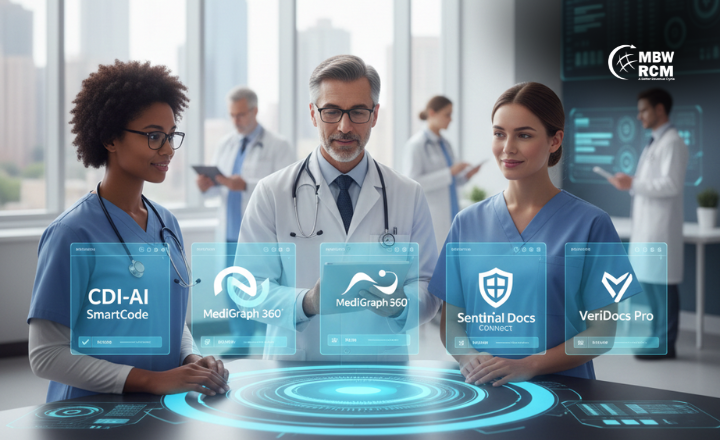
Hospitals in 2026 are increasingly adopting Clinical Documentation Improvement Software to standardize documentation, support compliance, and improve documentation workflows across inpatient settings. With multiple CDI platforms available, selecting the right solution requires understanding how different tools perform across hospital operations. This blog provides an overview of CDI software and highlights the top five CDI solutions hospitals trust in 2026 based on functionality, scalability, and clinical adoption.
What is Clinical Documentation Improvement Software?
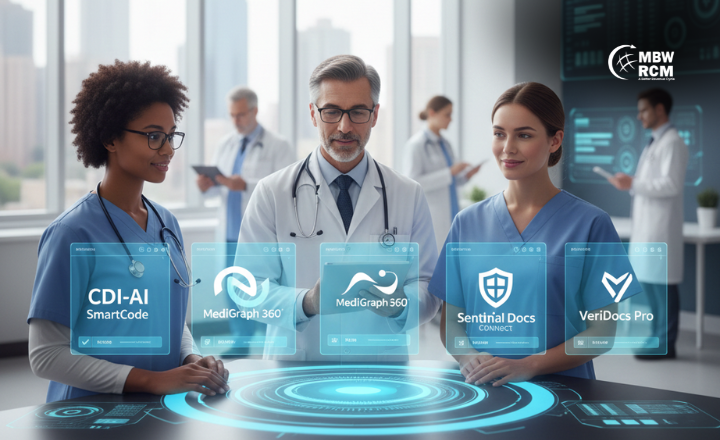
Clinical Documentation Improvement software is a specialized healthcare tool designed to enhance the completeness, accuracy, and clarity of clinical records. It integrates with Electronic Health Records (EHRs) and provides immediate prompts, coding suggestions, analytics, and reporting to ensure documentation reflects the true clinical picture.
In hospital settings, CDI software supports both:
Concurrent CDI (during the patient stay) — helping clinicians document correctly at the point of care.
Retrospective CDI (after discharge) — improving documentation, coding accuracy, and compliance
The result is better quality scores, optimized reimbursement, and reduced risk of denials or audits. Want to understand why CDI matters for revenue cycle performance? Learn how Clinical Documentation Integrity supports accurate reimbursement and compliance
Comparison of CDI Models and Documentation Outcomes
Hospitals evaluating Clinical Documentation Improvement Software in 2026 prioritize platforms with proven results, clinical accuracy, and scalable adoption. The following CDI solutions are trusted by hospitals for improving documentation quality, supporting compliance, and integrating into everyday clinical workflows.
1. 3M™ 360 Encompass™ CDI Platform
➤ Best for: Large health systems and academic medical centers
3M’s solution is a comprehensive Hospital CDI solutions platform that integrates CDI, coding, and auditing into a single ecosystem.
➤ Key Capabilities
AI-driven case prioritization based on DRG and SOI/ROM impact
Embedded DRG optimization software logic
Concurrent and retrospective review workflows
Integrated Clinical audit support tools
➤ Operational Impact
Hospitals using 3M report reductions of up to 30% in post-discharge queries and measurable gains in documentation turnaround time within the first 90 days.
➤ Ideal Use Case
Organizations with complex service lines such as cardiology, neurology, and trauma care that require high documentation precision.
2. Health Catalyst — ChartWise CDI
➤ Best for: Hospitals focused on analytics-driven CDI improvement
Health Catalyst — ChartWise CDI connects documentation improvement with advanced clinical and operational analytics, making it a strong CDI software for hospitals focused on data-driven documentation accuracy and quality performance models.
➤ Key Capabilities
AI-driven identification of documentation gaps aligned with ICD-10 documentation improvement
Embedded workflows within EHR-integrated CDI software environments (Epic, Cerner)
Advanced dashboards supporting Documentation quality improvement and SOI/ROM capture
Strong support for Clinical coding and documentation alignment
➤ Operational Impact
Hospitals using ChartWise typically see:
10–15% CMI improvement over 9–12 months
Faster query closure (average 36–48 hours)
Improved physician adoption of CDI programs
➤ Ideal Use Case
Hospitals looking for Best CDI software for healthcare environments where analytics and clinician buy-in are top priorities.
3. Iodine Aware CDI
➤ Best for: High-volume inpatient facilities
Iodine focuses on immediate clinical insights and prioritization, helping CDI teams address documentation gaps while the patient is still admitted.
➤ Key Capabilities
Predictive analytics surfacing high-risk cases
Embedded alerts within EHR-integrated CDI software environments
Strong support for Documentation quality improvement
➤ Operational Impact
Many hospitals report reductions of 20–25% in retrospective query volume within six months.
➤ Ideal Use Case
Facilities transitioning from retrospective CDI to concurrent review models. Interested in the CDI toolkit for beginners? Download the PDF to explore foundational CDI concepts and best practices
4. Epic Systems — Epic (CDI) Module
➤ Best for: Epic hospitals with physician engagement challenges
Epic’s Clinical Documentation Improvement (CDI) module focuses on clinician-friendly documentation within the native EHR environment, positioning CDI as an embedded clinical support capability rather than an external administrative process.
➤ Key Capabilities
Embedded documentation guidance delivered during active patient encounters
Logic-based identification of missing diagnoses, acuity, and clinical specificity
Integrated clinical documentation improvement solutions directly within the Epic provider workflow
➤ Operational Impact
Hospitals report a 15–20% reduction in physician documentation time per encounter through earlier clarification and fewer retrospective queries.
➤ Ideal Use Case
Organizations focused on improving clinician satisfaction while maintaining documentation consistency, compliance, and alignment across inpatient services.
5. Clintegrity — Clintegrity CDI
➤ Best for: Mid-size and large hospitals seeking scalable CDI technology without RCM services
Clintegrity is a technology-only CDI vendor specializing in clinical documentation integrity and audit readiness. The platform supports both concurrent and retrospective reviews and is widely used by hospital-based CDI teams.
➤ Key Capabilities
Automated chart review workflows supporting clinical documentation integrity software
Built-in rules for DRG optimization software and payer compliance
CDI dashboards aligned with Revenue cycle documentation goals
Integrated Clinical audit support tools for internal and external audits
➤ Operational Impact
Hospitals leveraging Clintegrity typically achieve:
20–30% reduction in manual chart review effort
Improved alignment between CDI specialists and coders
Stronger performance in payer audits within the first 90–120 days
➤ Ideal Use Case
Hospitals that want a standalone CDI platform supporting enterprise-grade governance, compliance, and reporting—without outsourcing documentation or coding functions.
CDI Software Feature Comparison
Why Hospitals Invest in CDI Software
Hospitals invest in CDI software to address documentation gaps that affect compliance, revenue performance, clinician efficiency, and care coordination.
Improving Documentation Accuracy and Compliance
Incomplete documentation drives RAC audits and payer takebacks when clinical narratives lack ICD-10 specificity. clinical documentation integrity software aligns documentation with clinical coding and documentation standards using embedded clinical audit support tools, helping hospitals reduce compliance risk and audit denials by up to 20–30%.
Strengthening Revenue Cycle Performance
Complete and precise documentation is essential for correct reimbursement. Structured Revenue cycle documentation workflows supported by CDI technology demonstrate the Power of CDI by improving MS-DRG assignment, enabling hospitals to achieve a 3–8% case mix index (CMI) improvement within 6–12 months through DRG optimization software logic.
Reducing Physician and CDI Administrative Burden
Manual queries delay documentation and increase clinician fatigue. Advanced Physician query management automates workflows within the EHR, strengthening the CDI program for physicians and coders and reducing physician response times from five days to under 48 hours.
Enhancing Care Coordination and Patient Outcomes
Clear documentation supports informed decisions and continuity of care. Strong documentation quality improvement reinforces Clinical quality and patient experience by improving SOI/ROM accuracy and enabling safer care transitions.
Physician Query Management Before and After CDI Implementation
How to Choose the Right CDI Software
Selecting the Best CDI software for healthcare organizations requires aligning technology with operational goals. Key evaluation criteria include:
EHR Integration – Seamless workflows reduce friction and increase adoption.
Concurrent CDI Capability – Real-time feedback delivers greater financial and quality impact.
Analytics and Reporting – High-quality dashboards reveal patterns and track improvement.
Physician Engagement Tools – Essential for a sustainable CDI program for physicians and coders.
Scalability – Platforms must support future growth and regulatory change.
Strategic Value of CDI in Modern Hospitals
Beyond financial outcomes, CDI supports Strategic Clinical Documentation Integrity by aligning clinical, operational, and compliance objectives. The Power of CDI lies in its ability to transform documentation into a reliable source of truth—supporting audits, payer negotiations, and quality reporting.
Hospitals with advanced CDI programs consistently outperform peers in documentation accuracy, audit resilience, and interdisciplinary collaboration.
Start Your CDI Optimization Now with MBW RCM
Selecting the right Clinical Documentation Improvement Software is essential for strengthening documentation consistency, compliance, and operational efficiency. MBW RCM helps hospitals advance Clinical Documentation Integrity through structured CDI strategies aligned with hospital workflows. If you’re looking to improve documentation performance and support your CDI goals, contact us today to explore how we can support your hospital’s next phase of CDI optimization.
Request for Information
Fill out the form to receive a CDI workflow and documentation review. Our specialists evaluate documentation practices and physician query processes to identify gaps affecting compliance and performance.
Gain clearer insight into your Clinical Documentation Integrity and take timely action. Get started today.