

Billing services for mental health require accurate and timely credentialing of providers. Since claims submission depends on verified qualifications, credentialing plays an important role in preventing denials and delays. This blog covers credentialing best practices, important steps in the process, common challenges, and compliance guidelines to help optimize credentialing and improve billing services for mental health.
Understanding Billing Services for Mental Health and Credentialing
Billing involves submitting claims for reimbursement of mental health care. At the same time, credentialing verifies the qualifications and licenses of mental health providers. Together, billing services for mental health and credentialing help avoid delays or denials. In fact, credentialing reduces the chance of rejected claims due to unverified provider credentials. For more detailed best practices and guidelines, check out our Behavioral and Mental Health Best Practices Guidelines.
The Role of Credentialing in Mental Health Billing Services
Credentialing determines whether mental health providers qualify to submit claims. Because insurers require verified credentials, uncredentialed providers often face claim rejections. Furthermore, credentialing builds trust between providers, payers, and patients. Therefore, billing depends on completed credentialing to move forward.
Key Steps in the Credentialing Process for Mental Health Billing
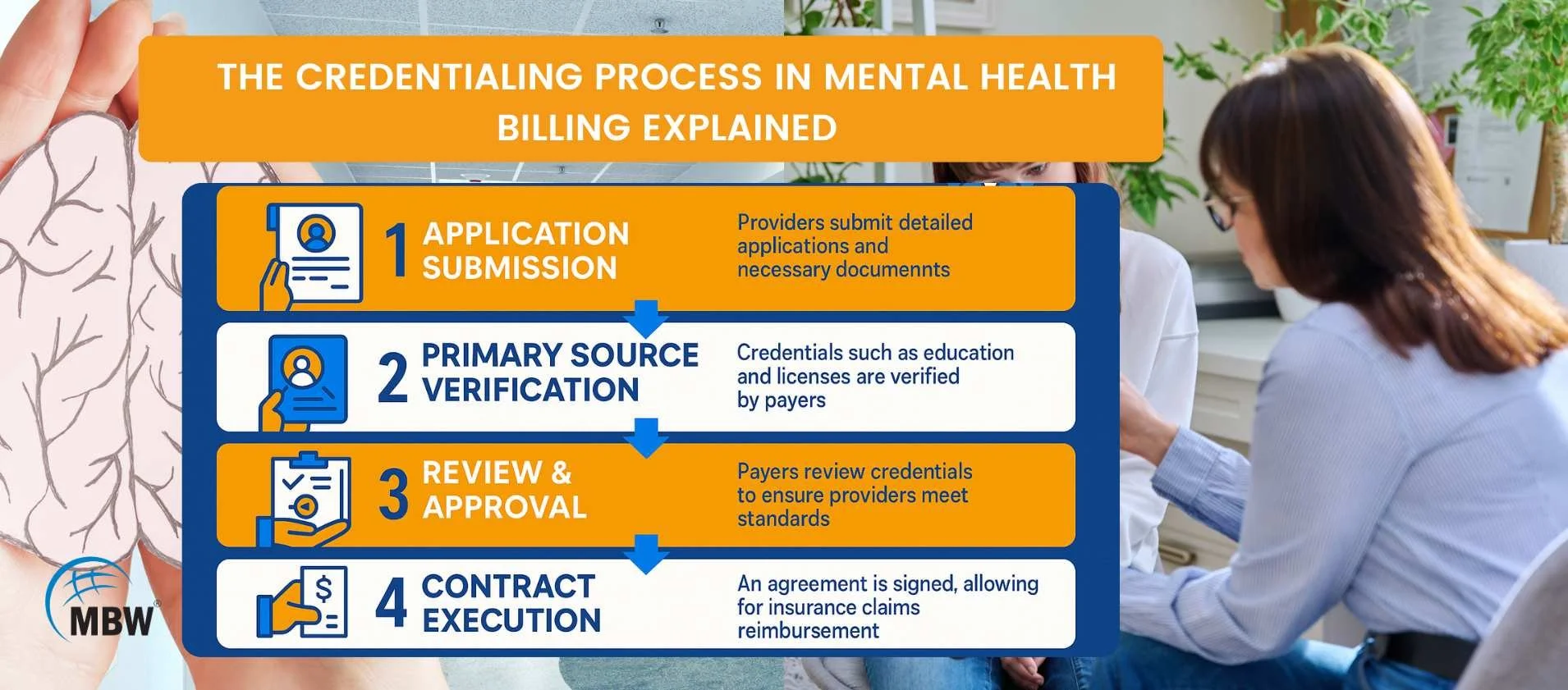
To participate in billing, providers must complete a thorough credentialing process. This process verifies their qualifications, licenses, and professional background, which insurers require before approving claims. Because of this, following the credentialing steps carefully helps avoid delays in billing and claim denials. Below are the main steps involved in the credentialing process:
Document Collection
Mental health providers first collect all required documents, such as state licenses, professional certifications, malpractice insurance, and background checks.
Application Preparation
Next, providers complete detailed credentialing applications tailored for each insurance panel, ensuring accuracy and completeness.
Application Submission
Then, providers submit the completed applications along with supporting documents to the insurance companies or credentialing organizations.
Verification by Insurers
After submission, insurers review the applications and verify all credentials, including education, licensing, and work history. This verification may take several weeks.
Site Visit or Interview (If Required)
Sometimes, insurers perform a site visit or conduct interviews to confirm provider qualifications and practice environment.
Approval or Denial Notification
Once verification completes, providers receive notification of approval or denial. Approved providers are added to insurance networks.
Credentialing Maintenance and Re-credentialing
Providers must regularly update credentials and re-credential every 2-3 years to maintain billing eligibility.
Required Documents for Mental Health Credentialing Process
Common Challenges Faced in Mental Health Services Billing Credentialing
Despite efforts, credentialing often faces delays due to incomplete paperwork or slow insurer response. Moreover, re-credentialing every few years adds more paperwork. Sometimes, credentialing mistakes cause rejected claims and disrupt billing services for mental health. Consequently, providers must monitor credentialing timelines carefully to avoid interruptions. For detailed strategies on managing these challenges, refer to our guide on Mastering Mental Health Billing.
Best Practices for Effective Credentialing Management
To reduce delays, submit applications early and verify all documents carefully. Also, keep a checklist to track credentialing requirements. Communicate with insurers regularly for status updates and quickly address issues. Another key point: assign credentialing tasks to dedicated staff or specialized services to keep consistency. For a detailed overview, refer to The Ultimate Guide to Provider Credentialing.
“Credentialing is like a secret handshake — miss a step, and you’re out of the club!”
How Technology Supports Credentialing for Mental Health Services Billing
Technology eases credentialing management through automation. These tools send renewal reminders, securely store documents, and track application progress. As a result, providers lower manual errors and save administrative time. In addition, cloud-based credentialing software supports collaboration, improving billing services for mental health workflows.
Top Credentialing Software Options for Mental Health Billing
Compliance Considerations in Credentialing and Billing
Maintaining compliance during credentialing is critical for billing services for mental health. Providers must follow payer rules, protect patient data, and meet federal and state regulations. Failure to comply can delay billing or lead to claim denials. Below are key compliance areas to keep in mind:
Adherence to Payer-Specific Credentialing Requirements
Different insurance payers have their own credentialing rules. Therefore, providers must carefully review each payer’s guidelines to comply with unique documentation and verification standards. Failure to meet these can delay billing services for mental health or cause claim denials.
HIPAA and Patient Privacy During Credentialing
During credentialing, providers handle sensitive patient information. Accordingly, HIPAA regulations require strict protection of this data. Mental health providers must use secure systems and follow privacy protocols to avoid breaches throughout credentialing.
CMS Guidelines for Medicare Credentialing
CMS mandates specific credentialing timelines and procedures for Medicare billing. Specifically, credentialing must be completed before billing Medicare claims. Providers should keep up with CMS updates to avoid compliance issues that affect billing services for mental health.
State Licensing Boards and Credentialing Compliance
State licensing boards often require mental health providers to maintain active licenses as part of credentialing. Consequently, providers must monitor license renewals and report changes promptly to insurance panels to sustain eligibility in billing services for mental health.
Impact of Regulatory Changes on Credentialing Practices
Regulations governing credentialing can change periodically. Hence, providers must stay informed about federal and state updates, payer policy shifts, and legal requirements. Staying current helps maintain compliance and prevents interruptions in billing services for mental health.
Improving Revenue Cycle Through Credentialing Management
Effective credentialing management helps reduce claim denials and supports better participation in provider networks. Consequently, billing cycles shorten, and reimbursements become more reliable. Ultimately, managing credentialing properly leads to smoother billing processes and improved financial outcomes in billing services for mental health.
Credentialing Documents Checklist for Mental Health Services Billing
Preparing the right documents is a critical step in credentialing. Insurers require a complete set of verified documents to approve providers for billing. Missing or outdated paperwork can cause delays or claim denials. Below is a checklist of the most common credentialing documents needed:
State License: Proof of a valid, current license to practice mental health care.
Professional Certifications: Specialty certifications and continuing education certificates that demonstrate provider qualifications.
Malpractice Insurance: Documentation of liability insurance coverage required by payers.
Background Checks: Criminal and professional background verification to ensure provider integrity.
Curriculum Vitae (CV): A detailed work history, education background, and training summary.
W-9 Form: For tax purposes, verifying the provider’s taxpayer identification number.
Photo ID: A government-issued ID to confirm identity.
Ensuring that these documents are accurate and up to date helps streamline the credentialing process. Providers should review and organize these documents regularly to support timely billing services for mental health.
Credentialing Timeline and Expected Duration
Proper credentialing is essential for successful billing services for mental health. Following best practices and staying compliant helps reduce denials and speed up payments. Partnering with MBW RCM can further optimize your credentialing and billing processes to ensure smooth revenue flow.
If you’re ready to improve your billing services for mental health, start by reviewing your credentialing procedures today or consult with a specialist to ensure your practice meets all requirements. Don’t let credentialing delays hold back your revenue—take action now!