
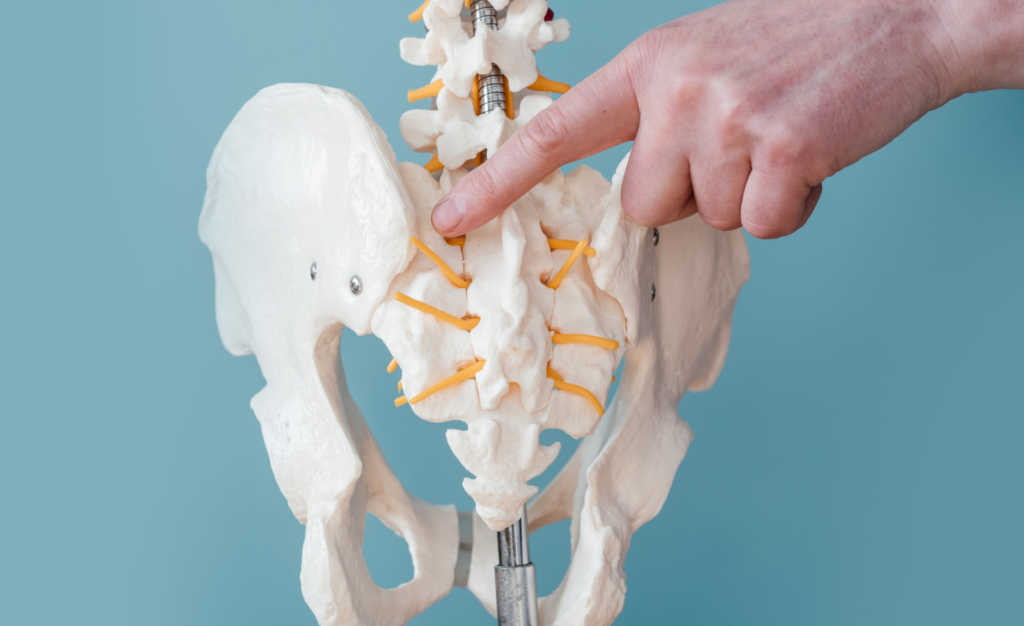
A surgeon places one threaded implant across the sacroiliac joint and packs graft into the joint space beside it. Is that 27278 or 27279? Under the 2026 descriptors, the answer is the SI joint fusion CPT code 27279, because one device pierces the bone cortex.
That single detail now drives code choice, payment and coverage. CPT 27279 covers devices that cross or pierce the iliac or sacral cortices, while 27278 covers intra-articular devices that stay inside the joint. In addition, Medicare contractors cover minimally invasive fusion only with a transfixing device, so the operative note has to describe the implant precisely.
CPT 27278 vs 27279: Follow the Device
The CPT 27278 vs 27279 choice no longer depends on the approach or the surgeon’s name for the technique. Instead, it follows the implant. Start with the operative note and trace one of three paths.
Path 1: Every device stays inside the joint. If the implants sit within the joint space and do not pierce the ilium or sacrum, report 27278. This is a minimally invasive SI joint arthrodesis with intra-articular devices only.
Path 2: At least one device crosses or pierces a cortex. If any implant passes across the joint or through the lateral or medial iliac cortex or the lateral sacral cortex, report 27279. That holds even when other devices in the same case stay intra-articular.
Path 3: The surgeon opened the joint. An open fusion reports 27280 open SI fusion, which includes graft harvest and instrumentation when performed.
Both 27278 and 27279 are unilateral codes. So a bilateral case reports the code once per side, following the payer’s rules for modifier 50 or RT and LT.
What the 2026 Descriptors Changed
The 2026 SI joint descriptor change rewrote both minimally invasive codes around one test: does a device pierce the cortex? According to ISASS, the update also settled how to code mixed techniques.
Revised 27278
CPT 27278 now reports image-guided, minimally invasive SI joint fusion using intra-articular devices that do not pierce the cortices of the ilium or sacrum. These are typically allograft or spacer implants placed into the joint, often from a posterior approach. ISASS lists its 2026 work RVU at 7.66.
Revised 27279
CPT 27279 reports the same procedure when trans-articular and/or intra-articular devices pierce the lateral or medial iliac cortex and the lateral sacral cortex. Threaded or triangular implants placed across the joint fall here, with a 2026 work RVU of 11.83.
Hybrid Constructs
Hybrid SI joint fusion coding follows a simple rule. When a case combines intra-articular and cortex-piercing devices, report 27279 once, as long as at least one device pierces the cortex. Do not add 27278 for the intra-articular part of the same joint, because the two codes describe alternative techniques for one fusion.
SI Joint Fusion CPT Code 27279 Side by Side
With the descriptors clear, the three codes compare like this on sacroiliac joint fusion billing:
| Code | Device and approach | Medicare coverage |
|---|---|---|
| 27278 | Minimally invasive; intra-articular devices only; 2026 wRVU 7.66 | Not covered by MACs whose 2025 LCDs require a transfixing device |
| 27279 | Minimally invasive; at least one device crosses or pierces a cortex; 2026 wRVU 11.83 | Covered when LCD criteria are documented |
| 27280 | Open fusion, including graft and instrumentation when performed | Outside the minimally invasive LCDs; standard medical necessity applies |
The coverage column matters most. The final 2025 LCDs from Noridian, Palmetto GBA and other contractors state that fusion without a transfixation device is not reasonable and necessary, as ACR’s summary of the policy notes. As a result, a Medicare 27278 claim usually needs an ABN before surgery.
SI Joint Fusion LCD Criteria
Each SI joint fusion LCD, such as Noridian’s L39810, effective February 16, 2025, sets the bar for Medicare payment. The exact thresholds vary by contractor, so always check the LCD for the patient’s jurisdiction.
What the Chart Must Show
- Chronic SI joint pain that limits daily function
- Failed conservative care, such as physical therapy and medication, over the period the LCD sets
- Positive SI joint provocation tests on exam
- Imaging that rules out other sources of pain, such as the hip or lumbar spine
- Pain relief after image-guided diagnostic SI joint injections, at the level the LCD requires
- A transfixing device, named in the operative note
Conservative care is often the thinnest part of the record. Our guide to failed conservative treatment documentation shows what payers expect.
What Auditors Look For
CMS lists MIS SI joint fusion as an approved Recovery Audit review topic for 27279 in ASCs, hospital outpatient departments and physician claims. So the operative note should name the implant, state which cortices it crossed and confirm image guidance. Without those details, an auditor cannot tell 27279 from 27278.
How to Get SI Joint Fusion Claims Approved and Paid
Approval and payment come down to three stages.
Before surgery: SI joint fusion prior authorization is standard for most commercial and Medicare Advantage plans. Send the planned code, device type, injection results, exam findings and therapy history together, and get an ABN for Medicare when coverage is unlikely.
At submission: code from the device path in the operative note, and add the implant line to the facility claim, a frequent gap covered in our post on spine implant revenue leakage.
After a denial: match the fix to the reason.
- Not medically necessary: appeal with the LCD evidence, following our prior authorization appeals guide.
- Not covered: if any device pierced a cortex, correct 27278 to 27279; if not, bill the patient only with an ABN.
- Code mismatch: ask the surgeon to clarify the device path, then resubmit.
These fixes add up over a year, as this spine practice case study shows.
Choose 27278 or 27279 With Confidence in 2026
The 2026 rules make SI joint coding a question about the implant. A device that crosses or pierces a cortex means the SI joint fusion CPT code 27279, even in a hybrid construct. Intra-articular devices alone mean 27278, which most Medicare contractors will not cover, and an open fusion means 27280. From there, the LCD criteria and a precise operative note decide whether the claim pays. Vertebral augmentation raises similar questions, and our guide to kyphoplasty CPT code billing compares 22510 to 22515.
Surgeons, ASCs and hospitals that perform these cases need the device details, injection results and prior authorization to line up before the date of service. MBW RCM confirms each of those points for every SI joint case, and its spine surgery billing services carry the claim through to payment or appeal.
SI Joint Fusion CPT Code 27279 FAQs
What is the difference between 27278 and 27279?
27278 reports minimally invasive SI joint fusion with intra-articular devices that do not pierce the cortices. In contrast, 27279 reports fusion with at least one device that crosses or pierces the iliac or sacral cortex.
How do I code a hybrid SI joint fusion?
Report 27279 once when at least one device pierces a cortex, even if other devices stay inside the joint. Do not add 27278 for the same joint.
Does Medicare cover CPT 27278?
Generally not. The 2025 LCDs from several Medicare contractors cover minimally invasive SI joint fusion only with a transfixing device.
Is 27279 billed per side?
Yes. 27279 is a unilateral code, so a bilateral case reports it for each side, following the payer’s modifier rules.
When is 27280 used instead of 27279?
Use 27280 for an open SI joint fusion. It includes obtaining bone graft and instrumentation when performed.